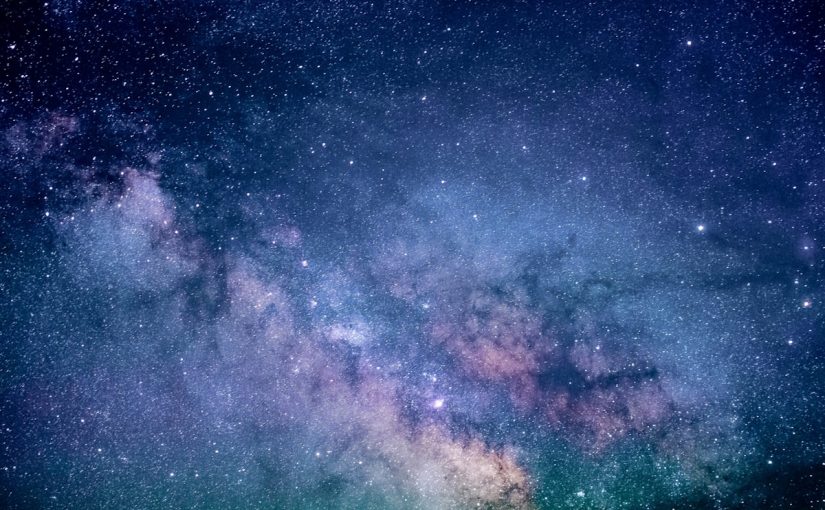
To look up at the night sky is to see the oldest and most powerful question humanity has ever asked: what lies beyond, and how can we reach it? For thousands of years, the stars were utterly unreachable, points of light to be wondered at but never touched. Then, within a single lifetime, mathematics changed everything. The same numbers that describe the arc of a thrown ball, the pull of a planet, and the thrust of a burning engine were used to send human beings to the Moon and robotic explorers to the edge of the solar system. Space exploration is, at its heart, applied mathematics, a triumph of numbers, equations, and the human determination to understand the universe. The United Kingdom Mathematics Trust exists to reveal exactly this kind of hidden power in the subject, showing young people that the mathematics they learn in school is the very language in which the cosmos is written.

The Dream of the Stars
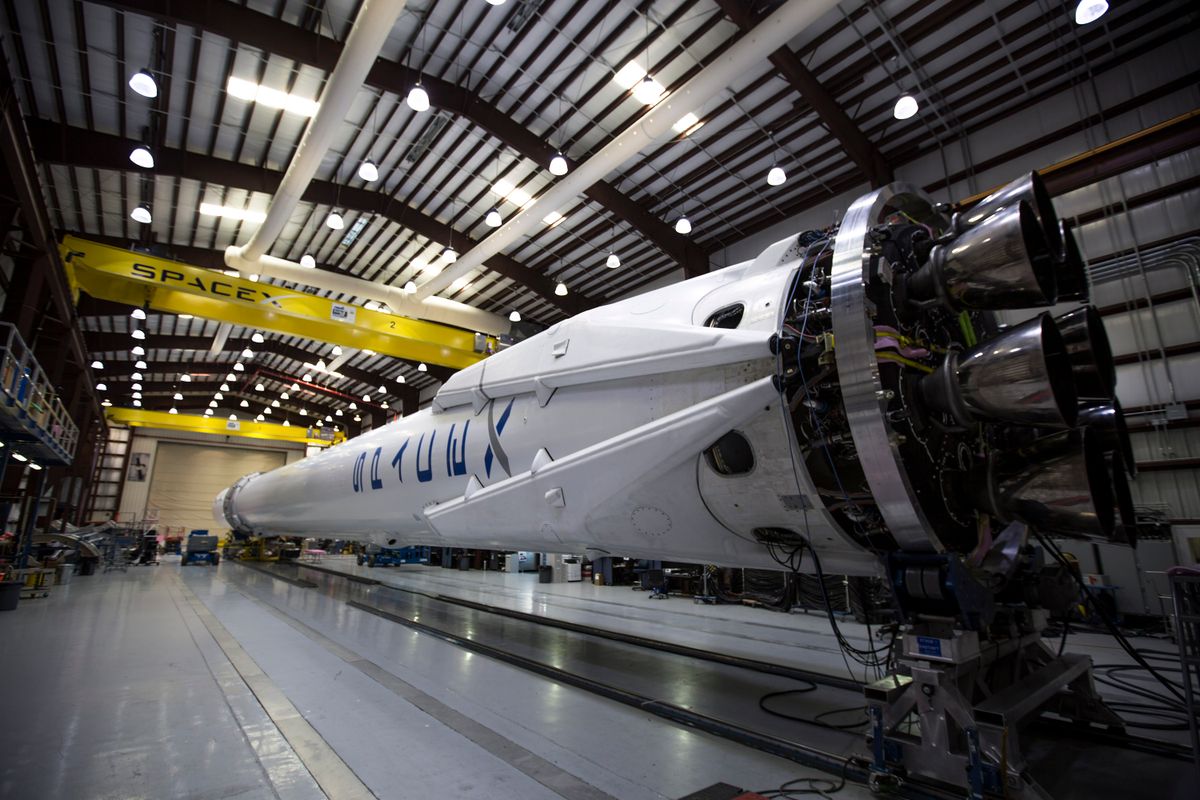
The desire to explore space is ancient, but for most of history it was a dream with no practical path. The obstacle was not a lack of courage or ambition; it was a lack of mathematics. To leave the Earth, one must overcome its gravity, and to do that, one must understand exactly how much force is needed, how fast a rocket must travel, and how the mass of the rocket changes as it burns its fuel. These are not questions that can be answered by trial and error; they must be calculated precisely, and the calculations depend on the deep mathematics of motion, force, and energy.
The breakthrough came in the work of scientists and mathematicians who developed the mathematics of rocketry. They showed that the behaviour of a rocket could be described by equations, and that those equations could be solved to determine exactly what was needed to reach orbit and beyond. This was a triumph of applied mathematics, and it turned the dream of space travel from a fantasy into an engineering problem. The equations were hard, but they were solvable, and once they were solved, the path to the stars was open.
For a student, this is one of the most inspiring stories in all of science. It shows that mathematics is not merely a classroom subject but a tool of extraordinary power, a tool that can turn the impossibly distant into the reachable. It is exactly this sense of wonder and possibility that UKMT seeks to nurture in young people, showing them that the numbers they study are connected to the greatest adventures of the human race.
The Rocket Equation: The Arithmetic of Escape
At the heart of every rocket launch lies a single, elegant piece of mathematics known as the rocket equation. It describes how the final speed of a rocket depends on the speed of its exhaust and the ratio of its initial mass to its final mass. The faster the exhaust is expelled, and the greater the proportion of the rocket that is fuel, the faster the rocket can go. This simple relationship, expressed in a few lines of algebra, is the foundation of all spaceflight.
The rocket equation reveals both the power and the challenge of spaceflight. It shows that to reach orbit, a rocket must be overwhelmingly fuel, and the payload, the useful part that carries instruments or people, is a tiny fraction of the total. This is why rockets are so enormous and why engineers work tirelessly to make every component as light as possible. The mathematics of the rocket equation drives the design of every spacecraft ever built.
The equation also teaches a broader lesson about the mathematics of rates and change. The rocket loses mass as it burns fuel, so its acceleration is not constant but changing. Understanding this requires the mathematics of changing rates, the same mathematics that describes how a population grows, how a medicine is absorbed, and how a loan is repaid. It is a beautiful example of how a single mathematical idea can illuminate phenomena across the widest imaginable range of scale.
Gravity and Orbits: The Geometry of the Heavens
Once a spacecraft is in orbit, it is governed by the mathematics of gravity. Isaac Newton showed that the force of gravity between two objects depends on their masses and the distance between them, and that this single law could explain the motion of the Moon, the planets, and a falling apple alike. The path of a satellite around the Earth, the orbit of a planet around the Sun, and the graceful arc of a comet are all described by the same equations, and they all trace the same family of curves: the circle, the ellipse, the parabola, and the hyperbola.
These curves, known as conic sections, were studied by the ancient Greeks long before anyone imagined they would describe the motion of the heavens. They are produced by slicing a cone with a plane at different angles, and their geometry is rich and beautiful. The fact that the same curves studied for their own sake thousands of years ago turned out to be the shapes of the cosmos is one of the most remarkable discoveries in the history of thought, and it is a testament to the power of mathematics to reveal the hidden structure of the universe.
For a student, the geometry of orbits is a window onto the deep connection between abstract mathematics and the physical world. It shows that the shapes studied in a geometry lesson are not confined to the page but are the very paths that planets trace across the sky. It is a connection that UKMT helps students to appreciate, building the understanding that mathematics is not a separate subject but the language of nature itself.
Reaching the Moon: The Mathematics of Distance and Time
The Moon is the nearest celestial body to Earth, yet it is still almost four hundred thousand kilometres away. To reach it, a spacecraft must travel for days through the vacuum of space, navigating a path that is constantly influenced by the gravity of both the Earth and the Moon. Planning such a journey requires solving a problem of three bodies, the Earth, the Moon, and the spacecraft, all moving under their mutual gravitational attraction, a problem of extraordinary mathematical complexity.
The Apollo missions that landed humans on the Moon were triumphs of mathematical navigation. The spacecraft had to be launched at exactly the right moment, placed on exactly the right trajectory, and corrected at intervals along the way. The timing of the engine burns, the angles of approach, and the return path all had to be calculated with extraordinary precision. A small error in the initial conditions could have meant missing the Moon entirely or failing to return to Earth. The mathematics that made this possible was the mathematics of orbital mechanics, differential equations, and numerical computation.
The story of the Moon landings is one of the most compelling demonstrations of the power of mathematics that has ever been given. It shows that with enough understanding, enough calculation, and enough courage, the human mind can reach across the void and touch another world. It is a story that UKMT is proud to share with young people, inspiring them to see mathematics as a passport to the greatest adventures.
Journey to Mars: The Interplanetary Problem
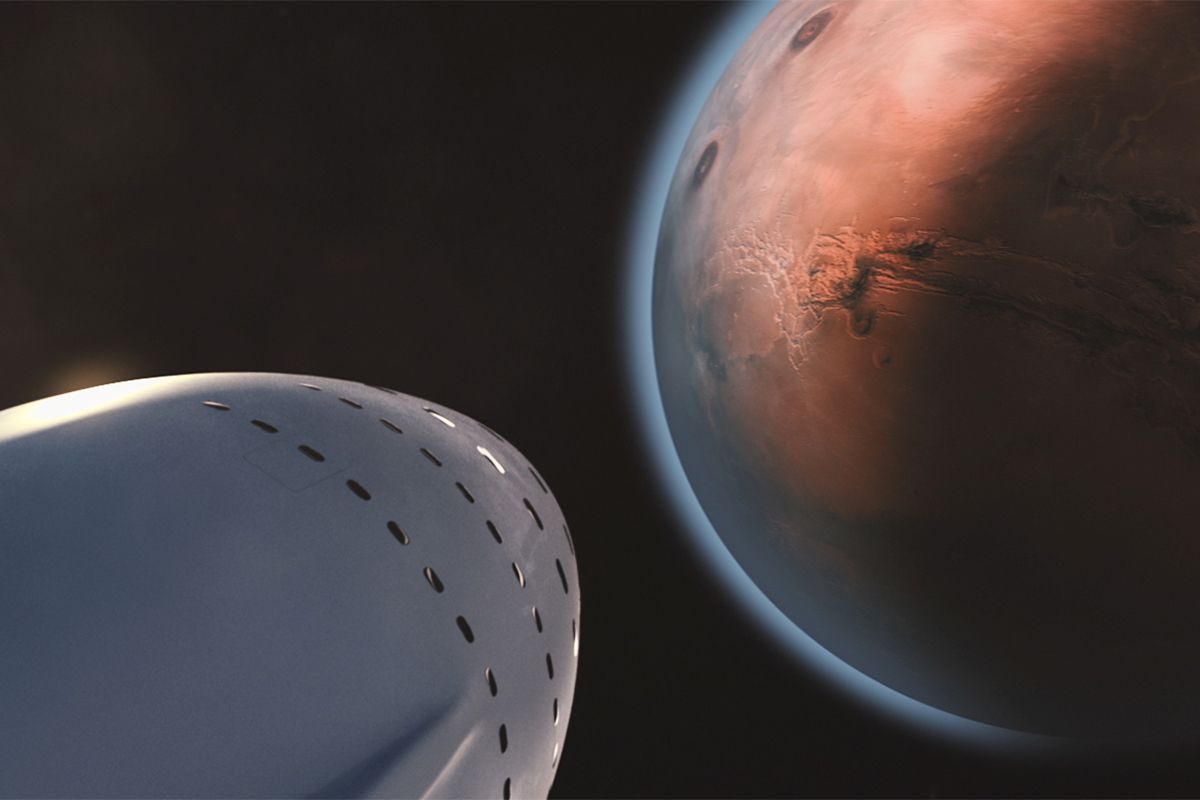
If the Moon is a challenge, Mars is an order of magnitude harder. The Earth and Mars are both moving around the Sun at different speeds and in different orbits, and a spacecraft travelling between them must intercept a moving target after a journey of many months. The most efficient path is not a straight line but a curved trajectory that takes advantage of the natural motion of the planets, a path known as a transfer orbit.
The mathematics of interplanetary travel draws on the same principles as the journey to the Moon, but stretched across vastly greater distances and times. The timing of a launch window, the brief period when the planets are aligned favourably, must be calculated years in advance. The spacecraft must be tracked and guided across millions of kilometres. The mathematics of these calculations is not fundamentally different from the mathematics of Earthly navigation, but the precision required is far higher, and the consequences of error are far more severe.
The ongoing exploration of Mars, by rovers, orbiters, and eventually by human missions, is one of the most exciting scientific endeavours of our time. It depends, at every step, on mathematics. The engineers who design the spacecraft, the navigators who guide them, and the scientists who interpret their data are all using the mathematical skills that students begin to develop in school. UKMT, by nurturing these skills and the curiosity that drives them, helps to prepare the next generation of explorers.
The Eye on the Sky: Telescopes, Mirrors, and Lenses
Exploration is not only about travelling; it is also about seeing. The telescope is the instrument that first opened the universe to human observation, and it is a masterpiece of applied mathematics. The shape of a telescope mirror, the curve of its lens, and the way it gathers and focuses light are all governed by the geometry of reflection and refraction, the mathematics of how light bends when it passes from one medium to another or bounces off a surface.
The most powerful telescopes ever built use mirrors that are curved to exquisite precision, following the mathematical shape of a parabola. A parabolic mirror has the property that all light rays arriving parallel to its axis are reflected to a single point, the focus, where they form a sharp image. This is pure geometry, and it is what allows telescopes to gather the faint light of distant galaxies and bring them into view. The mathematics of optics is one of the oldest and most beautiful applications of geometry, and it continues to drive the design of ever more powerful instruments.
Modern telescopes also use mathematics to process the images they capture. The raw data from a telescope is a stream of numbers, and turning those numbers into a picture requires sophisticated algorithms and statistical methods. The ability to handle data, to recognize patterns, and to extract meaning from noise is a mathematical skill of growing importance, and it is one that UKMT helps to cultivate.
The Deep Universe: Light-Years and the Scale of Space
The universe is vast beyond ordinary comprehension. The nearest star to the Sun is more than four light-years away, meaning that light, the fastest thing in the universe, takes four years to make the journey. The Milky Way galaxy contains hundreds of billions of stars and stretches across a hundred thousand light-years. Beyond it lie billions of other galaxies, each an island of stars, scattered across distances so great that our minds struggle to grasp them.
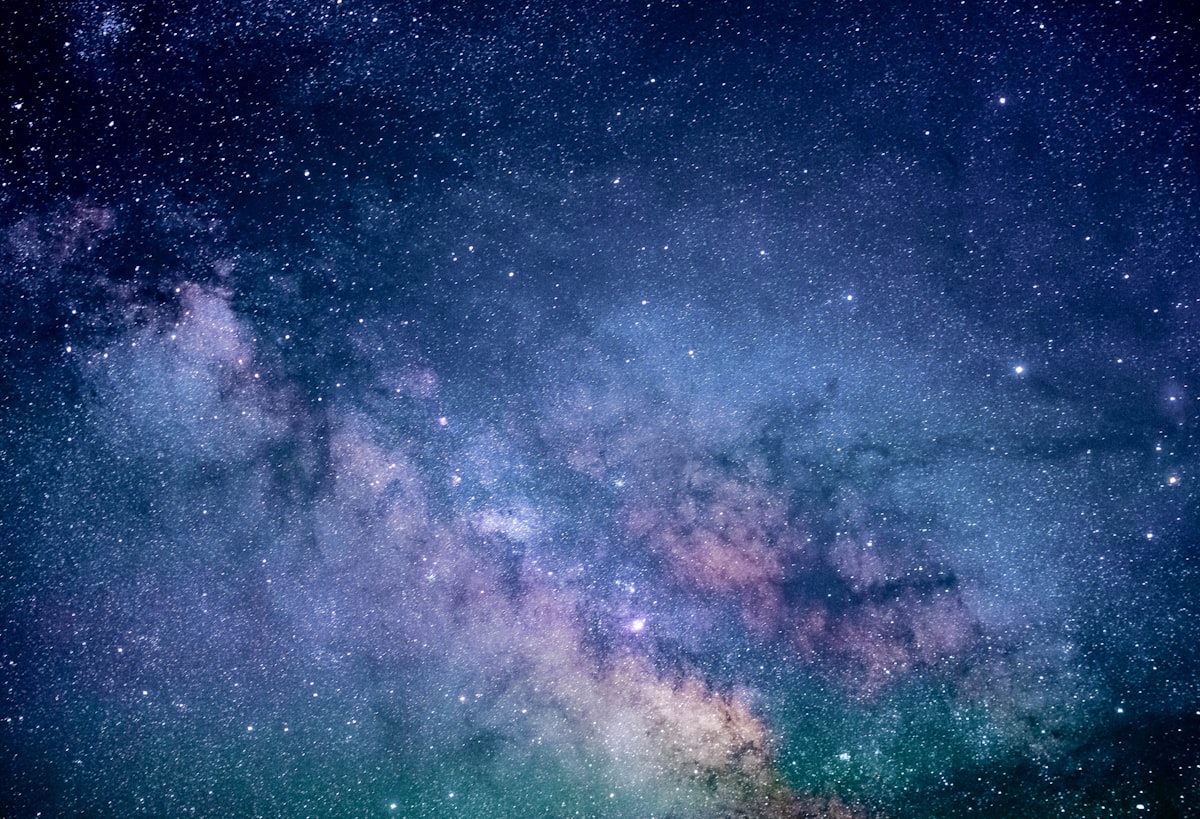
Measuring these cosmic distances requires mathematics of extraordinary ingenuity. Astronomers use a chain of methods, each calibrated by the one before, to build a ladder of distances that reaches from the Earth to the edge of the observable universe. They measure parallax, the tiny shift in a star apparent position as the Earth moves around the Sun, which is a direct application of trigonometry. They use standard candles, objects whose true brightness is known, to infer distance from apparent brightness, which is an application of the inverse square law. Each rung of the cosmic distance ladder is a mathematical achievement.
The scale of the universe is humbling, but it is also a testament to the power of mathematics. The same numbers that measure the size of a classroom can, with the right reasoning, measure the size of a galaxy. This is the extraordinary reach of mathematical thinking, and it is a source of wonder that UKMT hopes to share with every student.
Satellites and the Space Age: Mathematics in Orbit
Space exploration is not only about distant worlds; it is also about the thousands of satellites that orbit the Earth, providing communication, navigation, weather monitoring, and scientific observation. Every one of those satellites is a mathematical object, placed in a precisely calculated orbit and maintained by the mathematics of celestial mechanics.

The global positioning system, which allows a phone to know its location anywhere on Earth, depends on satellites whose orbits are known with extraordinary precision. Each satellite carries an atomic clock, and the timing of its signals must be corrected for the effects of relativity, the subtle warping of time predicted by Einstein. The mathematics of GPS is a fusion of geometry, orbital mechanics, and the physics of relativity, and it is one of the most impressive applications of mathematics in daily life.
The story of satellites is a reminder that space exploration is not only about grand voyages but also about the quiet, persistent work of mathematics in orbit. The skills that keep a satellite in its place, that process its signals, and that put its data to use are the skills of careful calculation, precise measurement, and clear reasoning. They are the skills that UKMT nurtures in every student who takes up its challenges.
The Mathematics of Discovery: From Observation to Understanding
Space exploration is, at its deepest level, an act of discovery, and discovery is a mathematical process. The data that comes back from spacecraft, from telescopes, and from rovers on other worlds is a flood of numbers, and turning those numbers into understanding requires the mathematics of analysis, statistics, and modelling. The discovery of planets around other stars, the measurement of the expansion of the universe, and the detection of gravitational waves were all made possible by mathematics as much as by technology.
The mathematical mind is a mind that looks for patterns, that asks what the data is saying, and that tests hypotheses against evidence. These are the habits that drive science forward, and they are the habits that mathematics education cultivates. A student who learns to analyze a graph, to interpret a probability, and to reason from evidence is not just learning a subject; they are learning to think like a scientist, like an explorer, like someone who can look at the unknown and find a way to understand it.
The universe is vast, and our knowledge of it is still small. But with mathematics as a guide, we have already travelled farther than any previous generation could have imagined. The next great discoveries are waiting, and the minds that will make them are being shaped now, in classrooms and in competitions, by the challenges and the encouragement that UKMT provides.
How UKMT Inspires the Next Generation of Explorers
The United Kingdom Mathematics Trust has long understood that the best way to prepare young people for a mathematical future is to let them experience the joy and challenge of real problem-solving. Through its competitions, mentoring, and enrichment programmes, UKMT introduces students to mathematics as it is truly practised, not as a matter of memorization but as a creative exploration of the patterns that govern the universe. The same skills that allow a student to solve a tough problem are the skills that would allow them to calculate an orbit, to design a telescope, or to navigate a spacecraft to Mars.
Space exploration is one of the most inspiring arenas in which mathematics is applied, and it is an arena that will need talented, mathematically trained minds for generations to come. The students who discover a love of mathematics today may be the ones who design the rockets of tomorrow, who discover new worlds, or who finally answer the ancient question of whether we are alone in the universe. By nurturing curiosity, precision, and a love of discovery, UKMT helps to prepare these students for the extraordinary contributions they will one day make.
The stars have always called to us, and mathematics has always been the way we answer that call. From the first equations of orbital motion to the signals of the farthest satellites, mathematics is the language of the cosmos. To learn that language is to join the great conversation that stretches from the ancient astronomers to the explorers of tomorrow. The numbers are there, written in the sky and in the equations, waiting to be read. All that is needed is the curiosity to look up, and the mathematical mind to understand what the universe is telling us.