

Money is one of the most powerful forces in the world, and it is also one of the most mathematical. Every time we save, spend, borrow, or invest, we are engaging with numbers, rates, and probabilities, whether we realize it or not. Behind every bank account, every stock market, every mortgage, and every national economy lies a vast architecture of mathematics that has been developed over centuries to help people understand, manage, and grow wealth. To see this architecture is to see finance in a new light, not as a mystery known only to experts but as a rich and practical application of the mathematics we learn in school. The United Kingdom Mathematics Trust exists to reveal exactly this kind of hidden power in the subject, showing young people that the numbers they study are the very tools that shape the financial world around them.


The Invisible Arithmetic of Wealth
From the moment a child receives their first pocket money, they are entering a world governed by mathematics. The decision to save or to spend, the calculation of how much is needed for a purchase, and the anticipation of how long it will take to reach a goal are all exercises in arithmetic and reasoning. These small, everyday transactions are the seeds of financial literacy, and the habits they build can last a lifetime.
What makes finance such a powerful application of mathematics is that it connects directly to the choices we all face. How much should I save each month? What will this loan really cost me? Is this investment worth the risk? Answering these questions well requires clear thinking about numbers, rates, and time, and the mathematical tools for doing so are accessible to any student who has learned the basics of arithmetic, percentages, and algebra. The numbers that govern our financial lives are not hidden; they are simply waiting to be understood.
This is one of the most practical and empowering messages that mathematics education can offer. It says that the financial world is not a realm of mystery but a domain that can be understood and navigated with confidence. UKMT, through its emphasis on clear reasoning and problem-solving, helps students develop exactly the skills that make such understanding possible.
Saving and the Magic of Compound Interest
If there is one mathematical idea that everyone should understand, it is compound interest. Put simply, compound interest is interest earned on interest. When you save money and leave the interest to accumulate, the interest itself begins to earn interest, and the total grows faster and faster over time. This is the same exponential growth that appears in population biology and the spread of disease, and it is one of the most powerful forces in finance.

The effect of compounding is often described as magic, and the description is not far from the truth. A small amount saved regularly and left to grow for decades can become a surprisingly large sum, not because of any clever trick but because of the relentless mathematics of exponential growth. The key variable is time. The earlier one starts saving, the more time compounding has to work, and the difference between starting at twenty-five and starting at thirty-five can be enormous. This is a lesson in the mathematics of growth that every student can grasp, and it is one of the most valuable lessons they will ever learn.
Understanding compound interest also teaches patience and the value of long-term thinking. It shows that small, consistent actions can lead to large results, and that the most powerful mathematical tool is often simply time. These are not only financial lessons; they are lessons for life, and they are the kind of insight that UKMT hopes to foster in young people.
The Stock Market: Risk, Return, and Diversity
The stock market is one of the most visible and dramatic arenas of financial mathematics. Every day, millions of shares change hands, prices rise and fall, and fortunes are made and lost. Behind the headlines and the excitement lies a rich mathematical framework for understanding what is happening and why. The mathematics of markets draws on probability, statistics, and the careful analysis of data to help investors make informed decisions.
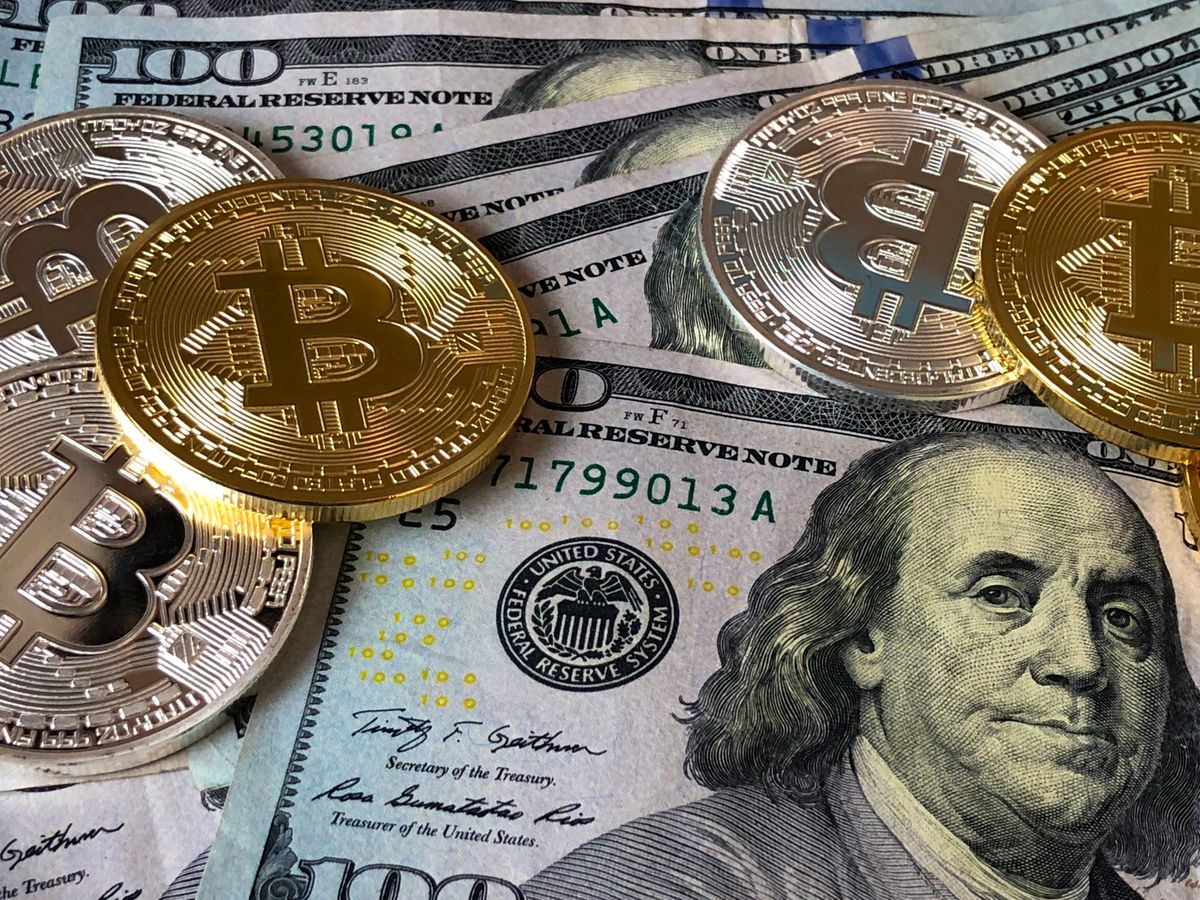
One of the central ideas in investing is the trade-off between risk and return. Investments that offer the potential for higher returns also carry greater risk of loss, and the art of investing is largely the art of managing this trade-off. Mathematics provides the tools for doing so, from the calculation of average returns and their variability to the idea of diversification, the principle that spreading investments across many different assets can reduce risk without sacrificing return. Diversification is, in essence, an application of the statistical fact that uncorrelated fluctuations tend to cancel out when combined.
These ideas are surprisingly accessible to students. The concepts of average, variation, and correlation are central to statistics, and they are exactly the tools needed to understand the basic principles of investing. UKMT problems that involve data, probability, and careful reasoning help students build the foundation for this kind of financial thinking, even if the problems themselves are about dice rather than stocks.
Budgets and Balance: The Arithmetic of Personal Finance
At the most personal level, finance is about the simple arithmetic of income and expenditure. A budget is a plan for how money will be earned and spent, and it is built on the fundamental operations of addition, subtraction, and comparison. The person who maintains a budget is, in effect, doing applied mathematics, and the discipline of keeping track of numbers and planning ahead is a skill that mathematics education strengthens.

Beyond the basics, personal finance involves percentages, fractions, and proportional reasoning. Sales tax, discounts, interest rates, and the division of income into categories of saving and spending all call on these skills. A person who is comfortable with percentages can quickly compare offers, understand the true cost of a purchase, and make better financial decisions. These are not advanced mathematical skills; they are the skills taught in the early years of secondary school, and they are among the most useful things a person can learn.
The connection between classroom mathematics and everyday financial decisions is direct and powerful. A student who masters percentages, fractions, and arithmetic is not merely passing a test; they are gaining tools that will serve them for the rest of their lives. Helping students see this connection is one of the most important contributions that mathematics education can make, and it is a contribution that UKMT is proud to support.
The Mathematics of Debt: Borrowing, Interest, and Repayment
If compound interest is the friend of the saver, it can be the enemy of the borrower. When money is borrowed, interest accumulates on the debt, and if the debt is not repaid quickly, the interest can grow faster than the borrower expects. Understanding the mathematics of borrowing is essential for anyone who uses a credit card, takes out a loan, or finances a large purchase.

The calculation of loan repayments is a classic problem in financial mathematics. It involves finding the regular payment that, over the term of the loan, will exactly pay off the principal together with the accumulated interest. This calculation, which appears in spreadsheets and mortgage statements everywhere, draws on the same mathematics of sequences and sums that students encounter in algebra. Understanding it demystifies the largest financial commitment most people will ever make.
Credit cards add another layer of mathematical complexity. With minimum payments, variable interest rates, and the compounding of unpaid balances, the cost of carrying credit card debt can be surprisingly high. The mathematics of credit card repayment is a powerful lesson in the importance of understanding the numbers behind financial products. It is a practical application of arithmetic and rates that everyone should master, and it is the kind of real-world mathematics that makes the subject come alive.
Data and Decisions: Reading Financial Charts
Financial information is increasingly presented in graphical form, from the stock charts that track price movements to the dashboards that summarize personal finances. Reading these charts and extracting their meaning is a skill that draws on the mathematics of data, graphs, and interpretation. A chart is a compressed story told in lines and numbers, and learning to read it is learning to think mathematically about the world.
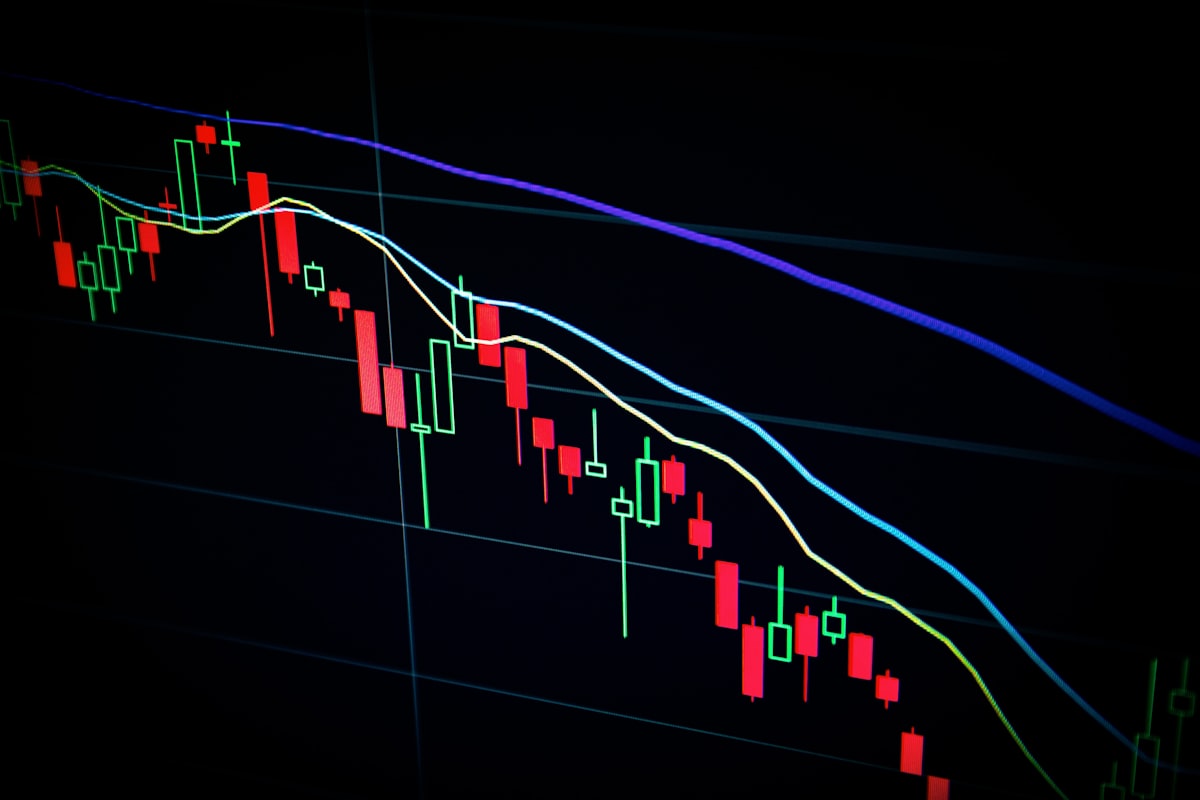
The ability to interpret graphs is one of the most valuable skills taught in mathematics education. It involves understanding axes, scales, and the relationship between variables. It requires the ability to distinguish between a genuine trend and random fluctuation, and the wisdom to know that a chart of the past cannot predict the future with certainty. These are skills that reach far beyond finance into every field where data is used to make decisions.
For a student, learning to read and create graphs is a way of developing a data-literate mind. It is a skill that grows with practice, and it is one that UKMT helps to cultivate through problems that involve interpreting data, recognizing patterns, and drawing conclusions from evidence. In a world increasingly driven by data, this is an essential capability.
Banking in the Digital Age: Algorithms and Automation
The modern financial system runs on software. Algorithms decide whether to approve a loan, detect fraudulent transactions, execute trades in fractions of a second, and manage the risk of enormous portfolios. These algorithms are built on mathematics, from the simple rules of arithmetic to the sophisticated models of probability and optimization. The quiet engine of the financial world is a machine of numbers.

The mathematics behind these algorithms is not fundamentally different from the mathematics students learn in school. It is the same logic, the same algebra, and the same probability, applied at scale and at speed. The difference is not in the mathematics itself but in the power of computation to apply it to vast amounts of data. Understanding this helps students see that the mathematics they are learning is not old-fashioned or irrelevant but the foundation of the most modern and dynamic industries.
The rise of digital finance also raises important questions about fairness, transparency, and responsibility. When decisions are made by algorithms, it is vital that those algorithms are understood and scrutinized. This, too, is a role for mathematical thinking. The ability to question a model, to understand its assumptions, and to judge its outputs is a skill that belongs to the mathematically literate citizen, and it is one that UKMT helps to develop.
The Economy at Scale: Growth, Cycles, and the Big Picture
Zoom out from personal finance to the level of a whole economy, and the mathematics becomes even more ambitious. Economists use mathematical models to understand how entire nations produce, consume, save, and grow. They measure gross domestic product, track inflation, and study the cycles of boom and recession that economies experience over time. These models are built on the mathematics of rates, growth, and systems.

The models of economics are not perfect, and they are subject to fierce debate, but they provide a framework for thinking about the big questions of prosperity and policy. What causes growth? How can inflation be controlled? What is the relationship between government spending and economic activity? These are questions that cannot be answered by simple arithmetic, but they can be approached with the tools of mathematical reasoning, and the ability to engage with them is a mark of an educated citizen.
For a student, the mathematics of the economy is a reminder that the subject reaches far beyond the classroom. The numbers that describe the health of a nation are the same kind of numbers that appear in textbooks, and the ability to understand them is a power that belongs to anyone who has learned to think mathematically. UKMT, by encouraging students to reason carefully and to engage with the quantitative world, helps to prepare them for this kind of large-scale thinking.
Risk and Probability: The Mathematics of Insurance and Uncertainty
One of the most important financial industries, and one of the most mathematical, is insurance. Insurance works by pooling risk across many people. Each person pays a small premium, and the pool of premiums is used to cover the losses of the few who suffer misfortune. The mathematics that makes this possible is probability, the same mathematics that governs games of chance and the weather.
Actuaries, the mathematicians of the insurance world, use historical data to estimate the probability of different events, from car accidents to house fires, and to calculate the premiums that should be charged to cover those risks. Their work is a beautiful application of probability and statistics, and it shows how mathematics can turn uncertainty into a manageable cost. The same principles of risk pooling and probability underlie pension funds, health insurance, and many other financial arrangements that protect people from financial catastrophe.
Understanding insurance is a lesson in probability, in the value of sharing risk, and in the importance of reading the fine print. It is a practical application of the mathematics of chance, and it is one that every adult should understand. The habits of probabilistic thinking that students develop through mathematics, and through challenges like those of UKMT, prepare them to engage with these ideas with confidence.
How UKMT Nurtures the Financial Thinkers of Tomorrow
The United Kingdom Mathematics Trust has long understood that the best way to prepare young people for a mathematical future is to let them experience the joy and challenge of real problem-solving. Through its competitions, mentoring, and enrichment programmes, UKMT introduces students to mathematics as it is truly practised, not as a matter of memorization but as a creative exploration of the patterns that govern the world. The same skills that allow a student to solve a tough problem, the ability to reason clearly, to work with numbers, and to think logically about uncertainty, are the skills that underpin financial literacy and economic understanding.
Finance is not a separate world from the mathematics of school. It is a living, breathing application of the very ideas that students encounter every day. The compound interest of a savings account, the probability of an insurance claim, the graph of a stock price, and the budget of a household are all mathematical objects, and understanding them is a mathematical achievement. By helping students to see these connections, UKMT equips them not only to succeed in mathematics but to navigate the financial world with intelligence, confidence, and care.
Money makes the world go round, as the saying goes, but mathematics makes money understandable. The numbers are there, in every transaction and every statement, waiting to be read. With a mathematical mind, anyone can learn to read them, and in doing so, to take control of their financial future. That is a gift worth giving, and it is one that UKMT is proud to help deliver.