
The Psychology of Mathematical Problem-Solving: How UKMT Competitions Develop the Mind

When a student sits down to tackle a UKMT competition paper, something remarkable happens in their brain. Neural pathways activate, patterns are recognized, hypotheses are formed and tested, and the mind engages in one of the most complex and rewarding cognitive activities known to humanity. The psychology of mathematical problem-solving is a fascinating field that reveals how mathematical challenge shapes not just what students know, but how they think. UKMT competitions, with their carefully designed problems and progressive structure, provide an ideal environment for developing powerful cognitive abilities.

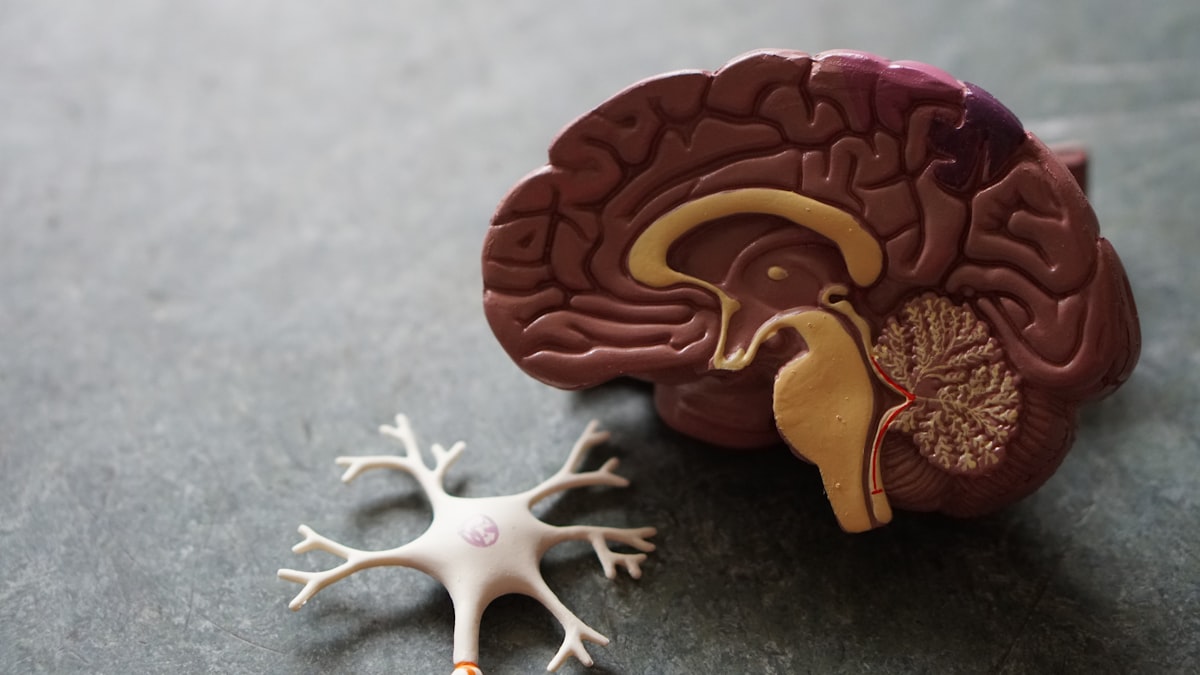
Brain and thought processes

The thinking brain: where mathematical problem-solving creates new neural connections

推荐

The Cognitive Architecture of Problem-Solving

Mathematical problem-solving engages multiple cognitive systems simultaneously. Working memory holds the problem statement and intermediate results in active awareness. Pattern recognition systems search for familiar structures and relationships. Executive function directs attention, plans strategies, and monitors progress. Creative thinking generates novel approaches when standard methods fail.

Research in cognitive psychology has shown that expert problem-solvers do not simply have more knowledge than novices — they organize their knowledge differently. Where beginners see isolated facts and procedures, experts see interconnected networks of concepts, relationships, and strategies. This organized knowledge structure allows experts to recognize problem types quickly, retrieve relevant strategies efficiently, and monitor their progress effectively.

Focused mind engaged in deep thinking

Deep focus: the state of mind that mathematical challenge cultivates

UKMT competitions are designed to develop this expert-like knowledge organization. The problems span multiple mathematical domains — number theory, geometry, algebra, combinatorics, logic — requiring students to make connections across areas. The progressive difficulty structure ensures that students build on existing knowledge while continually extending their capabilities. Over time, regular participation in UKMT challenges helps students develop the interconnected, flexible knowledge structures that characterize mathematical expertise.

The Role of Challenge: Optimal Cognitive Engagement

Psychological research has identified a concept known as the zone of proximal development — the sweet spot where tasks are challenging enough to promote growth but not so difficult as to cause frustration and disengagement. UKMT competitions are carefully calibrated to operate within this zone for students at each level.

The multiple-choice challenges (JMC, IMC, SMC) are structured so that the early questions are accessible to most participants, building confidence and engagement, while later questions stretch even the strongest students. This design ensures that every student experiences success while also encountering genuine challenge. The olympiad rounds provide even deeper challenge for those who seek it, offering problems that require sustained creative thinking and rigorous proof construction.

Problem-solving in action

The optimal challenge: problems that stretch abilities without overwhelming

This optimal challenge has profound psychological benefits. Students learn that struggle is not a sign of failure but a necessary part of learning. They develop cognitive resilience — the ability to persist through difficulty, to tolerate uncertainty, and to maintain effort when solutions are not immediately apparent. These psychological qualities transfer to all areas of life, from academic study to professional work to personal challenges.

Metacognition: Thinking About Thinking

One of the most powerful cognitive skills developed through mathematical problem-solving is metacognition — the ability to think about one's own thinking. Expert problem-solvers constantly monitor their progress, asking themselves questions: Am I on the right track? Is this approach working? What have I tried that didn't work? What else could I try?

UKMT competitions naturally develop metacognitive skills. The time-limited format requires students to make strategic decisions about which problems to attempt and how long to spend on each. The need to show working in olympiad problems forces students to externalize their thinking, making their thought processes visible and subject to review. The experience of getting stuck and then finding a way through teaches students to recognize and manage their own cognitive states.

Research has shown that metacognitive skills are among the strongest predictors of academic success, even more so than raw intelligence. Students who can monitor and regulate their own learning are better able to identify gaps in their understanding, seek appropriate help, and persist through challenges. UKMT's emphasis on problem-solving rather than rote learning naturally cultivates these crucial self-regulatory skills.

Creativity and Mathematical Insight

Mathematical creativity is a distinctive form of creative thinking that involves seeing patterns, making unexpected connections, and finding elegant solutions to complex problems. The "aha!" moment of mathematical insight — when a problem suddenly becomes clear — is one of the most rewarding cognitive experiences available to the human mind.

Neuroscience research has shown that mathematical insight involves a characteristic pattern of brain activity. The initial phase of problem-solving engages analytical, left-hemisphere processing as the problem-solver applies standard methods and procedures. When these approaches fail, the brain shifts to a more diffuse, right-hemisphere mode, allowing remote associations and novel connections to emerge. The moment of insight is accompanied by a burst of gamma-wave activity, reflecting the sudden integration of previously disconnected information.

Creative thinking and insight

The creative mind: where mathematical insight emerges from the interplay of analysis and imagination

UKMT competitions are designed to elicit this creative process. The problems cannot be solved by routine application of formulas — they require genuine mathematical thinking. Students must experiment with different approaches, recognize when standard methods are insufficient, and generate novel strategies. This creative challenge develops the flexible, generative thinking that characterizes mathematical creativity.

The satisfaction of mathematical insight is a powerful motivator. Students who experience the joy of solving a challenging problem develop intrinsic motivation for mathematical engagement. They seek out new challenges not for external rewards but for the cognitive pleasure of problem-solving itself. This intrinsic motivation is essential for sustained mathematical development and lifelong learning.

Growth Mindset: The Belief That Ability Develops

Perhaps the most significant psychological benefit of UKMT participation is the development of a growth mindset — the belief that mathematical ability is not fixed but develops through effort and practice. This mindset, identified by psychologist Carol Dweck, has profound implications for how students approach challenges and respond to setbacks.

Students with a fixed mindset believe that mathematical talent is innate — you either have it or you don't. When they encounter difficulty, they interpret it as evidence of their lack of ability, leading to discouragement and avoidance. Students with a growth mindset believe that ability develops through effort. When they encounter difficulty, they interpret it as an opportunity to learn and grow, leading to persistence and engagement.

Moment of inspiration and growth

Growth mindset: the belief that mathematical ability develops through effort and practice

UKMT competitions naturally foster a growth mindset. The progressive difficulty structure ensures that students experience both success and challenge, demonstrating that improvement is possible through practice. The mentoring scheme provides sustained support over time, allowing students to see their own development across months of engagement. The experience of solving problems that once seemed impossible provides powerful evidence that ability is not fixed but grows with effort.

推荐

Emotional Regulation: Managing Frustration and Anxiety

Mathematical problem-solving is an emotional experience. Students feel excitement when they make progress, frustration when they get stuck, anxiety when time is running out, and satisfaction when they finally solve a problem. Learning to manage these emotions effectively is an essential part of mathematical development.

UKMT competitions provide a safe environment for developing emotional regulation skills. The time-limited format creates mild pressure, teaching students to manage anxiety and maintain focus under stress. The experience of getting stuck and then finding a way through teaches students to tolerate frustration and persist through difficulty. The recognition that not finishing the paper is normal and expected helps students manage perfectionism and unrealistic expectations.

Mindfulness and emotional regulation

Emotional regulation: managing frustration, anxiety, and pressure in mathematical challenge

These emotional regulation skills transfer far beyond mathematics. Students who learn to manage frustration in problem-solving are better equipped to handle challenges in other academic subjects, in professional work, and in personal life. The ability to stay calm under pressure, to persist through difficulty, and to maintain a positive attitude in the face of setbacks are valuable life skills that UKMT participation helps to develop.

Social Cognition: Learning from Others

Mathematical problem-solving is often perceived as a solitary activity, but social interaction plays a crucial role in mathematical development. Discussing problems with peers, explaining solutions to others, and learning from different approaches all enhance mathematical understanding and develop social cognitive skills.

UKMT's team competitions provide rich opportunities for social cognitive development. In the Team Maths Challenge, students must communicate their thinking clearly, listen to others' ideas, and work collaboratively to solve problems. This social interaction develops not only mathematical understanding but also perspective-taking — the ability to understand and appreciate different approaches to the same problem.

Collaborative idea generation

Social cognition: learning from others' approaches and perspectives

The mentoring scheme also provides valuable social cognitive experiences. Working one-to-one with a mentor allows students to see how an experienced mathematician approaches problems, to ask questions and receive feedback, and to develop their mathematical communication skills. This social learning accelerates mathematical development and provides students with role models who demonstrate the value of mathematical thinking.

Transfer: Mathematical Thinking in Everyday Life

One of the most important questions in educational psychology is whether skills learned in one context transfer to other contexts. Does mathematical problem-solving develop general cognitive abilities that apply beyond mathematics? Research suggests that the answer is yes, particularly when the learning emphasizes thinking processes rather than specific content.

UKMT's focus on problem-solving rather than curriculum content maximizes transfer. The logical reasoning, pattern recognition, and strategic thinking skills that students develop through UKMT challenges apply to a wide range of real-world situations. Students who learn to approach mathematical problems systematically are better equipped to tackle complex challenges in science, engineering, business, and everyday life.

Brain applying mathematical thinking to real-world problems

Transfer: mathematical thinking skills that apply far beyond the classroom

The metacognitive skills developed through UKMT participation are particularly transferable. Students who learn to monitor their own thinking, to evaluate their progress, and to adjust their strategies are better able to manage their learning in any subject area. These self-regulatory skills are essential for success in higher education and professional life, where students must direct their own learning and solve novel problems independently.

The Long-Term Impact: Shaping Cognitive Development

The psychological benefits of UKMT participation extend far beyond the competition period. The cognitive skills, mindsets, and emotional regulation abilities that students develop through regular mathematical challenge become enduring features of their cognitive architecture. These developments shape how students approach learning, problem-solving, and challenge throughout their lives.

Research in cognitive development has shown that the adolescent brain is particularly plastic — highly responsive to experience and capable of significant growth. Mathematical challenge during this period can have lasting effects on cognitive abilities, particularly in areas such as logical reasoning, working memory, and executive function. UKMT's programmes, which engage students throughout their secondary school years, capitalize on this developmental plasticity to promote lasting cognitive growth.

Long-term cognitive development

Lasting impact: how mathematical challenge shapes cognitive development across the lifespan

The growth mindset developed through UKMT participation also has long-term benefits. Students who believe that ability develops through effort are more likely to seek out challenges, persist through difficulty, and continue learning throughout their lives. This lifelong learning orientation is essential in a rapidly changing world where the ability to adapt and acquire new skills is increasingly important.

Implications for Parents and Teachers

Understanding the psychology of mathematical problem-solving has practical implications for parents and teachers who want to support young mathematicians. The research suggests several key principles for fostering mathematical development.

First, emphasize process over outcome. Praise students for their effort, strategies, and persistence rather than just their results. This reinforces the growth mindset and encourages students to value the learning process itself. When students struggle with a problem, help them see the struggle as an opportunity for growth rather than evidence of inability.

Supporting mathematical development

Supporting growth: how parents and teachers can nurture mathematical thinking

Second, provide appropriate challenge. Students need problems that stretch their abilities without overwhelming them. UKMT's tiered structure makes it easy to find appropriate challenges for students at each level. Encourage students to work on problems that are just beyond their current ability, and celebrate their progress as they master new challenges.

Third, encourage reflection and discussion. Ask students to explain their thinking, to reflect on what strategies worked and what didn't, and to discuss problems with peers. This metacognitive and social engagement deepens understanding and develops communication skills. The mentoring scheme and team competitions provide structured opportunities for this kind of engagement.

The Joy of Mathematical Thinking

At its heart, the psychology of mathematical problem-solving is about joy. The satisfaction of solving a challenging problem, the excitement of mathematical discovery, the pleasure of elegant reasoning — these are among the most rewarding experiences available to the human mind. UKMT competitions provide countless opportunities for students to experience this joy, creating positive associations with mathematical thinking that last a lifetime.

When students discover that mathematics is not just a school subject but a source of intellectual pleasure and creative satisfaction, their relationship with learning is transformed. They seek out mathematical challenges not because they have to, but because they want to. They approach problems with curiosity and confidence rather than anxiety and avoidance. This transformation is perhaps UKMT's greatest gift to the young people it serves.

The joy of mathematical thinking

The joy of mathematics: where challenge meets satisfaction and learning becomes pleasure

The mind that learns to love mathematical thinking is a mind equipped for a lifetime of learning, problem-solving, and creative achievement. UKMT's competitions and enrichment programmes provide the challenges, support, and community that help young people develop this love of mathematics. In doing so, they shape not just better mathematicians, but more capable, resilient, and creative thinkers — individuals equipped to thrive in an increasingly complex world.

推荐

UKMT's Digital Transformation: Technology, Innovation, and the Future of Mathematical Education

The world of education is undergoing a profound transformation driven by technology, and mathematical enrichment is no exception. The United Kingdom Mathematics Trust (UKMT), while maintaining its commitment to traditional paper-based competitions, has embraced digital innovation to extend its reach, enhance its resources, and prepare young people for a future where mathematical thinking intersects with technology in unprecedented ways. This article explores how UKMT is navigating the digital revolution while staying true to its core mission of nurturing mathematical talent.

Digital learning environment

The intersection of mathematics and technology: where UKMT's digital journey begins

推荐

The Case for Digital: Why Technology Matters in Mathematical Education

Mathematics education has always been about more than calculation. It is about developing logical reasoning, creative problem-solving, and the ability to think abstractly. These skills are more valuable than ever in a world increasingly shaped by algorithms, data science, artificial intelligence, and complex systems. Students who develop strong mathematical thinking are uniquely positioned to thrive in the digital economy.

Technology offers powerful tools for mathematical learning. Interactive software can visualize complex concepts, making abstract ideas tangible. Online platforms can connect students with mentors and peers regardless of geographic distance. Digital resources can provide immediate feedback, allowing students to learn from mistakes in real time. These capabilities complement traditional teaching methods, creating richer and more effective learning experiences.

Student learning with tablet technology

Technology-enhanced learning: tablets and digital tools bringing mathematics to life

However, technology is not a panacea. The act of writing mathematical solutions by hand, of working through problems with pencil and paper, develops cognitive skills that digital tools cannot replicate. The physical act of writing engages different neural pathways than typing, reinforcing memory and understanding. UKMT recognizes this and has deliberately maintained paper-based competitions while embracing digital resources for preparation, practice, and community building.

Online Resources: Making Mathematical Enrichment Accessible

UKMT's website has become a central hub for mathematical enrichment, providing free access to resources that were once available only to registered schools. Past papers, video solutions, and preparation materials are now available to any student with an internet connection, dramatically expanding the organization's reach.

The video solutions represent a particularly innovative use of digital technology. These videos walk students through problem-solving strategies step by step, modeling the kind of mathematical thinking that written solutions alone cannot convey. Students can pause, rewind, and rewatch explanations, learning at their own pace and in their own time. This accessibility is particularly valuable for students who lack access to experienced teachers or mathematical mentors.

Screen displaying mathematical content

Digital resources: bringing expert mathematical guidance to students everywhere

The website also serves as a communication platform, connecting teachers with UKMT staff, providing updates on competitions and events, and sharing news from the mathematical community. This digital communication has streamlined administrative processes, reducing the burden on volunteer coordinators and allowing them to focus on what matters most — supporting students' mathematical development.

The Dr Frost Maths Partnership: Technology in the Classroom

UKMT's partnership with Dr Frost Maths represents a significant step in bringing technology into the mathematics classroom. This online platform allows teachers to assign UKMT problems to individual students or whole classes, track progress, and provide targeted support. The integration of UKMT content into a digital learning management system makes it easier than ever for teachers to incorporate mathematical challenge into their regular teaching.

The platform's analytics capabilities provide valuable insights into student performance. Teachers can identify which types of problems students find most challenging, track improvement over time, and adjust their teaching accordingly. This data-driven approach to instruction ensures that students receive the support they need exactly when they need it.

Online classroom environment

The digital classroom: technology enabling personalized mathematical learning

For students, the platform provides a structured pathway through UKMT's problem sets, with immediate feedback and the ability to retry problems until mastery is achieved. This gamified approach to learning motivates students to persist through challenges, developing the resilience and growth mindset that are essential for mathematical success.

Social Media and Community Building

UKMT's presence on social media platforms — Instagram, Facebook, YouTube, and TikTok — has transformed how the organization connects with students, teachers, and the broader mathematical community. These platforms provide real-time updates on competitions, behind-the-scenes content from summer schools and events, and celebrations of student achievement.

Social media has also created new opportunities for community building. Students can connect with peers who share their passion for mathematics, forming online study groups and discussion forums. Teachers can share best practices and resources, building a professional network that extends beyond their individual schools. This digital community supplements the in-person connections formed at competitions and summer schools, creating a year-round mathematical ecosystem.

Network connections representing digital community

Building community: digital networks connecting mathematicians across the country

The organization's YouTube channel has become a valuable educational resource, hosting video solutions, competition highlights, and interviews with mathematicians. These videos provide inspiration and guidance to students who may not have access to experienced mentors, democratizing access to mathematical expertise.

Digital Administration: Streamlining Operations

Behind the scenes, digital technology has transformed UKMT's administrative operations. Online registration systems allow schools to sign up for competitions quickly and easily, reducing paperwork and administrative burden. Digital answer sheet submission streamlines the marking process, allowing results to be returned to schools more quickly than ever before.

These operational efficiencies have practical benefits for schools and students. Faster results mean that students receive recognition and feedback more quickly, maintaining their motivation and engagement. Reduced administrative burden means that teachers can spend more time supporting students' mathematical development rather than managing paperwork.

Technology in education

Operational excellence: technology streamlining the path from registration to results

Digital communication has also improved UKMT's ability to reach schools and students. Email newsletters, website updates, and social media posts ensure that information about competitions, resources, and opportunities reaches the entire mathematical community quickly and efficiently. This communication infrastructure has proven particularly valuable during times of disruption, allowing UKMT to adapt its operations while maintaining continuity of service.

推荐

The Future: Emerging Technologies and Mathematical Education

As technology continues to evolve, new opportunities for mathematical education emerge. Artificial intelligence and machine learning offer the potential for truly personalized learning experiences, with adaptive systems that adjust to each student's pace and learning style. Virtual reality and augmented reality could transform how students visualize and interact with mathematical concepts, making abstract ideas tangible and engaging.

UKMT is monitoring these developments closely, evaluating how emerging technologies might enhance its programmes while maintaining the core values that have made the organization successful. The organization recognizes that technology should serve pedagogy, not the other way around. Any digital innovation must ultimately improve students' mathematical learning and development.

Future technology in education

The future of mathematical education: emerging technologies and endless possibilities

One area of particular interest is the potential for AI to provide instant feedback on mathematical proofs. While current systems can check arithmetic and simple algebra, evaluating the quality of a mathematical proof requires understanding of logic, clarity, and mathematical communication — capabilities that are still developing in AI systems. As these technologies mature, they could provide students with immediate, detailed feedback on their proof-writing, accelerating their development as mathematical communicators.

Balancing Tradition and Innovation

UKMT's approach to digital transformation is characterized by thoughtful balance. The organization embraces technology where it enhances learning and expands access, while preserving traditional methods where they remain most effective. This balanced approach reflects a deep understanding of how mathematical learning actually works.

Paper-based competitions remain central to UKMT's programme because they develop skills that digital formats cannot. The act of writing a mathematical proof by hand, of organizing thoughts on paper, of working through a problem without the crutch of computational tools — these experiences build mathematical maturity in ways that screen-based activities do not. UKMT preserves these experiences while using technology to support preparation, practice, and community.

Digital library of mathematical resources

Tradition meets innovation: preserving what works while embracing what's possible

This balance also reflects UKMT's commitment to equity. Not all students have equal access to technology. By maintaining paper-based competitions and providing free printed resources, UKMT ensures that students from disadvantaged backgrounds are not excluded from mathematical enrichment. Digital resources supplement rather than replace traditional methods, creating multiple pathways to mathematical engagement.

Preparing Students for a Digital Future

Perhaps the most important aspect of UKMT's digital transformation is its role in preparing students for a future where mathematics and technology are inseparable. The careers that today's students will pursue — in artificial intelligence, data science, cybersecurity, financial technology, and countless other fields — require not only mathematical knowledge but also the ability to think computationally and work with digital tools.

UKMT's competitions develop the foundational mathematical thinking that underpins all of these fields. The logical reasoning, pattern recognition, and problem-solving skills that students develop through UKMT challenges are precisely the skills needed to excel in technology-driven careers. By nurturing these abilities, UKMT prepares students not just for examinations but for the challenges of the digital economy.

Student prepared for digital future

Future-ready: mathematical thinking as the foundation for success in the digital age

The organization's engagement with technology also models the kind of adaptive thinking that students will need throughout their careers. By demonstrating how traditional mathematical education can evolve to incorporate new tools and approaches, UKMT shows students that learning is a lifelong process and that the ability to adapt and innovate is as important as any specific technical skill.

The Digital Divide: Ensuring Equitable Access

As UKMT expands its digital offerings, the organization remains acutely aware of the digital divide — the gap between those with ready access to technology and those without. Students from disadvantaged backgrounds may lack reliable internet access, modern devices, or quiet spaces for online learning. These barriers can prevent even the most talented students from benefiting from digital resources.

UKMT addresses this challenge through multiple strategies. The organization maintains free printed resources for schools that need them, ensuring that lack of technology does not prevent access to mathematical enrichment. Competition papers remain available in print format, and schools can choose the delivery method that best suits their circumstances. This flexibility ensures that digital transformation expands access rather than creating new barriers.

The organization also works with schools to identify students who may need additional support accessing digital resources. Teachers receive guidance on how to help students make the most of available technology, whether that means using school computers, accessing resources at local libraries, or working with printed materials. This practical support ensures that no student is left behind.

Collaboration and Open Resources

UKMT's digital transformation has been enriched by collaboration with other organizations in the mathematics education space. The partnership with Dr Frost Maths is one example, but the organization also works with universities, educational technology companies, and other mathematics enrichment providers to share resources and best practices.

This collaborative approach reflects UKMT's understanding that mathematical education is a shared endeavor. No single organization can meet all the needs of all students. By working together, sharing resources, and learning from each other's experiences, the mathematical education community can provide richer and more effective support for young people.

Collaborative digital learning

Collaboration in action: organizations working together to advance mathematical education

Open educational resources represent another important dimension of UKMT's digital strategy. By making past papers, solutions, and preparation materials freely available online, UKMT contributes to a growing body of open educational content that benefits students and teachers worldwide. This commitment to openness reflects the organization's belief that mathematical knowledge should be accessible to all.

Looking Ahead: The Next Chapter

As UKMT looks to the future, the organization remains committed to thoughtful, measured adoption of new technologies. The goal is not technology for its own sake but technology that genuinely enhances mathematical learning and expands access to enrichment. Every digital initiative is evaluated against this standard, ensuring that innovation serves the organization's core mission.

The coming years will bring new opportunities and challenges. Artificial intelligence will continue to evolve, potentially transforming how students learn and practice mathematics. Virtual and augmented reality may offer new ways to visualize and interact with mathematical concepts. Online learning platforms will become more sophisticated, enabling ever more personalized educational experiences.

Future possibilities in mathematical education

The journey continues: UKMT's commitment to innovation in service of mathematical excellence

Through all of these changes, UKMT's fundamental commitment remains unchanged: to nurture mathematical talent in young people from all backgrounds, to provide challenge and enrichment that develops not just mathematical knowledge but mathematical thinking, and to build a community where every student can discover their potential. Technology is a tool in service of this mission, not an end in itself.

推荐
Online Customer Service
Contact Customer Service