

We live in a world of uncertainty. Will it rain tomorrow? Will the bus arrive on time? Will a tossed coin land heads or tails? In every corner of life we face situations whose outcomes we cannot know for certain, and yet we navigate them every day. The mathematics that helps us reason about the uncertain is called probability, and it is one of the most fascinating, practical, and surprisingly beautiful branches of the subject. Far from being a niche topic for specialists, probability shapes the decisions we make, the predictions we trust, and the games we play. The United Kingdom Mathematics Trust exists to reveal exactly this kind of hidden power in mathematics, showing young people that the numbers they study are not only precise but also the very tools we use to understand a world that never quite stands still.

Living with Uncertainty
For most of human history, uncertainty was seen as something mysterious, even magical, a matter of fate or fortune to be endured rather than understood. The roll of dice, the draw of lots, and the toss of a coin were regarded as the workings of luck itself. But gradually, people began to ask a deeper question: can chance be measured? Can we say, with any precision, how likely one outcome is compared to another? The answer, worked out over centuries, is a resounding yes, and the mathematics that emerged from that question is probability.
The idea that uncertainty itself could be tamed by numbers was a revolution. It meant that while we cannot know the future, we can reason about it carefully. We can compare risks, weigh evidence, and make decisions that are better informed. This is one of the great gifts of mathematical thinking: it does not remove uncertainty, but it gives us a reliable way to live with it, to think clearly when the path ahead is foggy.
For a student, probability is a wonderful introduction to a different kind of mathematics, one that deals not in certainties but in likelihoods. It invites curiosity and imagination, and it connects directly to the games and choices of everyday life. It is exactly the kind of engaging, real-world mathematics that UKMT challenges are designed to bring to life.
The Language of Chance: What is Probability
At its core, probability is a way of measuring how likely something is to happen. It does so with a single number between zero and one. An event that is impossible has probability zero; an event that is certain has probability one. Everything in between expresses a degree of likelihood, from the very unlikely to the nearly certain. This simple scale is the foundation upon which an enormous edifice of reasoning is built.
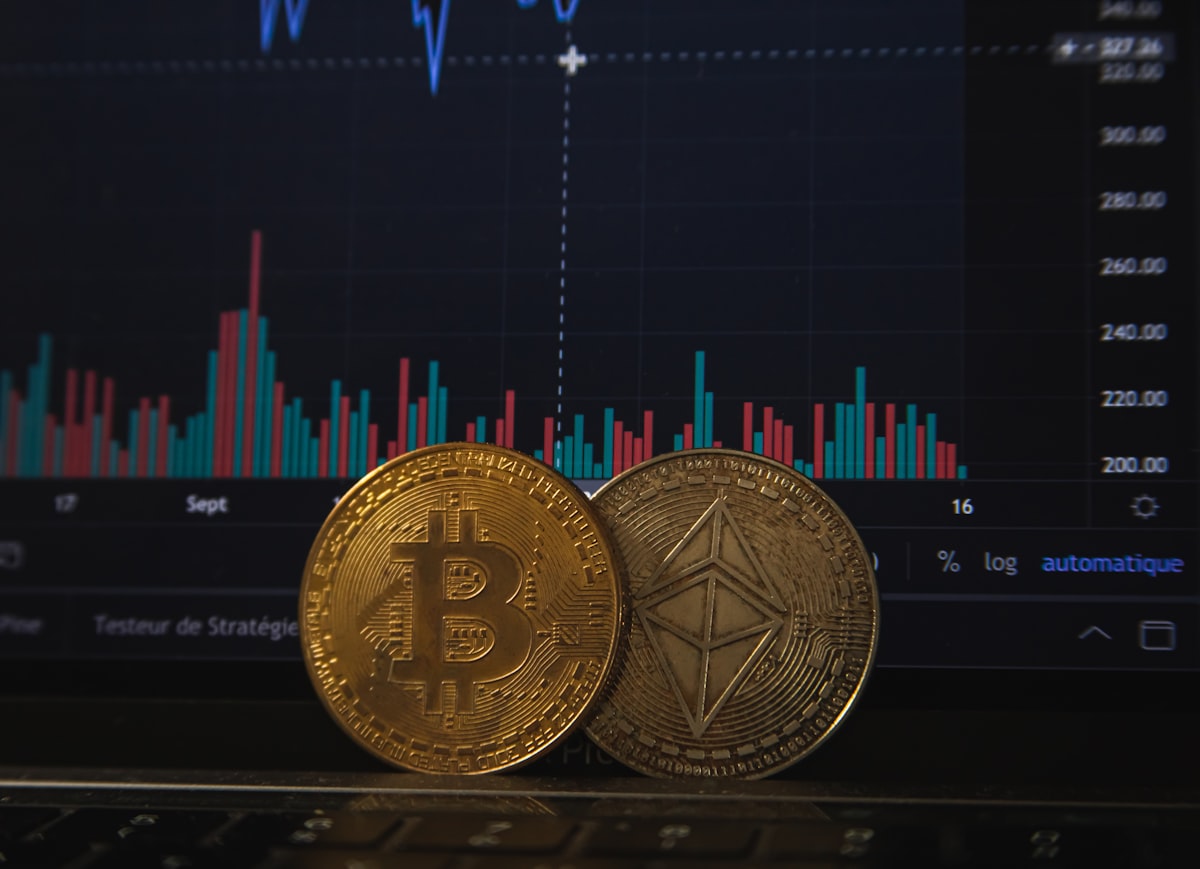
The simplest way to find a probability is to count. If you toss a fair coin, there are two equally likely outcomes, heads or tails, so the probability of heads is one out of two. If you roll a fair six-sided die, there are six equally likely outcomes, so the probability of rolling a particular number is one out of six. This counting approach, comparing the number of favorable outcomes to the total number of possible outcomes, is the gateway into probability, and it is a skill that students can begin to develop from their very first lessons.
Yet the simplicity of this idea conceals a world of subtlety. Real situations are rarely as clean as a coin or a die. Outcomes are not always equally likely, and events often depend on one another in complex ways. Learning to reason carefully about these situations, to count possibilities correctly and to account for every case, is a discipline of the mind that mathematics cultivates beautifully. It is a discipline that UKMT problems richly reward.
Games of Chance: Dice, Cards, and Counting Outcomes
Some of the richest and most enjoyable settings for probability are games. Dice, cards, and other games of chance have entertained people for thousands of years, and they also happen to be wonderful laboratories for mathematical reasoning. Every shuffle of a deck and every roll of the dice presents a question about possibility that mathematics can answer with precision.

Consider a standard deck of fifty-two cards. The number of different orders in which the deck can be shuffled is so vast that it is almost beyond imagination, and a well-shuffled deck is almost certainly in an order that has never existed before in the history of the universe. Questions like this, about how many arrangements or combinations are possible, belong to a branch of mathematics called combinatorics, and they lie at the heart of probability. Learning to count carefully, to distinguish between different kinds of outcomes, and to avoid missing or double-counting cases is one of the most valuable skills in all of mathematics.
Games also teach a crucial lesson about the difference between short-term luck and long-term likelihood. A player may win several hands in a row purely by fortune, but over many rounds the underlying probabilities assert themselves. This distinction between the randomness of the moment and the regularity of the long run is one of the deepest and most important ideas in probability, and it is one that students grasp naturally when they play and analyze games. UKMT problems that involve games and counting invite students to discover these ideas for themselves.
The Long Run: How Regularity Emerges from Randomness
One of the most remarkable facts about chance is that while individual events are unpredictable, large collections of them show striking regularity. Toss a coin ten times and you might see seven heads, but toss it ten thousand times and the proportion of heads will settle close to one half. Roll a die a million times and each face will appear roughly one sixth of the time. Randomness, in the long run, produces a pattern.

This principle, that long-run frequencies approach the true probabilities, is one of the foundations of statistics and of our understanding of the world. It is why insurers can set premiums, why casinos can rely on a small edge, and why scientists can draw conclusions from repeated experiments. The mathematics that describes this convergence is deep and beautiful, and it connects probability to the wider world of data and evidence.
Understanding this idea also protects us from a famous error of reasoning known as the belief that a run of one outcome makes the opposite outcome more likely. A coin that has landed heads five times in a row is no more likely to land tails on the next toss; each toss is independent, and the coin has no memory. Learning to recognize and avoid such errors is one of the most practical benefits of studying probability, a lesson in clear thinking that serves students throughout their lives.
Probability in Everyday Life: Weather and Forecasts
Probability is not confined to games and dice; it is woven into the decisions of everyday life, and nowhere is this more familiar than in the weather forecast. When we are told there is a sixty percent chance of rain, we are hearing a statement of probability, a careful assessment of uncertainty based on vast amounts of data and sophisticated models. Understanding what such a forecast means, and how to act on it, is a practical skill built on probabilistic thinking.

The weather is a wonderful example of probability at work on a grand scale. The atmosphere is so complex that no forecast can be certain, so meteorologists describe the future in terms of likelihoods, combining measurements, models, and past experience to estimate how likely different outcomes are. As more data arrives and models improve, these estimates are continually refined. This process of updating beliefs in the light of new evidence is at the heart of probabilistic reasoning, and it is one of the most powerful ideas in modern science.
For a student, the weather forecast is a reminder that probability is not abstract but deeply practical. Learning to interpret a chance of rain, to weigh the risk of being caught without an umbrella, is an everyday exercise in reasoning under uncertainty. It is one of the many ways that the mathematics taught in school connects directly to the choices we all make.
Distributions: The Shape of Randomness
When we look at the outcomes of many random events together, we often find that they form a characteristic shape. Measure the heights of a large group of people, or the results of many exam scores, or the errors in repeated measurements, and the values tend to cluster around a middle, with fewer and fewer observations far from the center. Plotted as a graph, this pattern forms the famous bell-shaped curve, one of the most recognizable and important shapes in all of mathematics.
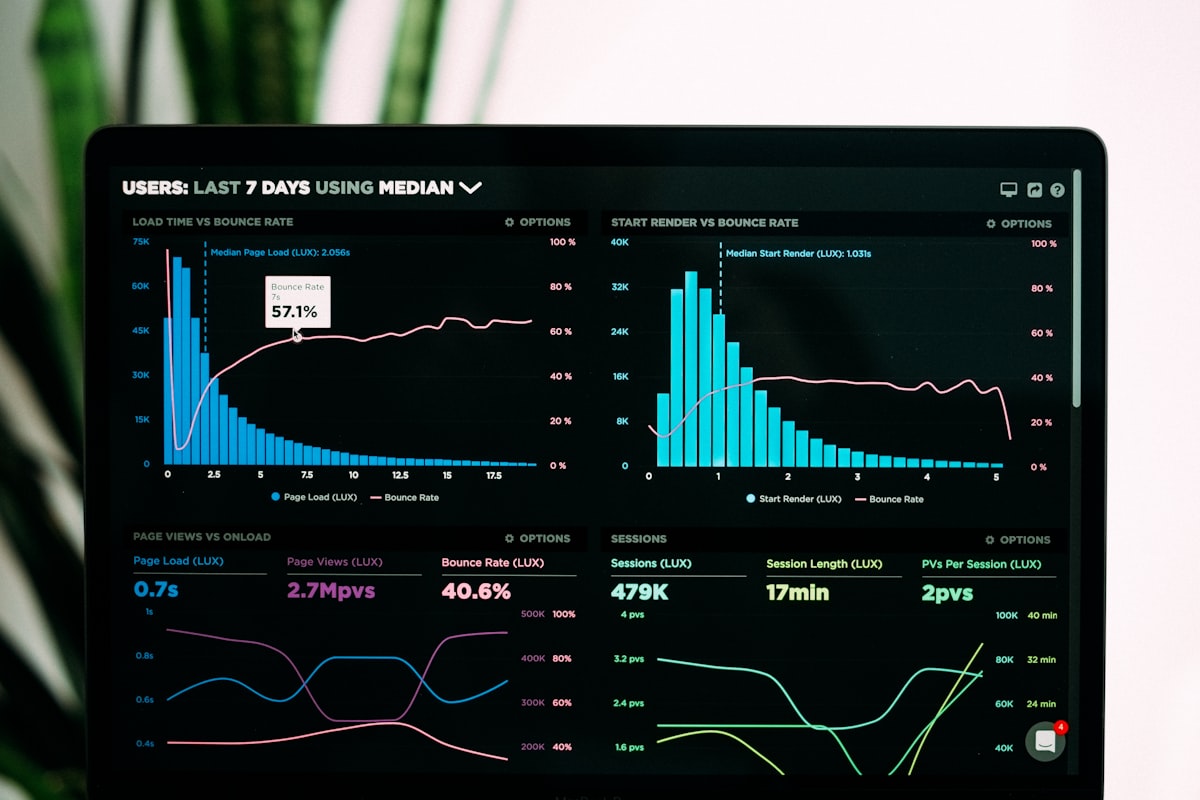
This bell-shaped pattern, described by a family of probability distributions, appears with astonishing frequency in nature and in human affairs. It arises whenever a quantity is influenced by many small, independent factors, each nudging the outcome a little. Understanding these distributions allows us to make predictions, to judge what is typical and what is unusual, and to assess the reliability of measurements and claims.
The study of distributions is where probability meets statistics, and together they form the backbone of modern data science. Students who learn to read and reason about distributions gain a powerful lens for understanding the world, one that helps them evaluate evidence and resist misleading claims. It is a skill of enormous value, and it grows directly from the foundations of probability that begin with a simple coin toss.
The Long Odds: Lotteries and Rare Events
Few things capture the imagination quite like the lottery, the dream of a vast prize won by a single lucky ticket. Yet the mathematics of the lottery is also one of the clearest illustrations of just how small very small probabilities really are. The chance of winning a major lottery jackpot is so tiny that it is almost impossible to grasp intuitively, and understanding these long odds is a valuable exercise in counting and perspective.

To see why, consider that a lottery requires matching several numbers drawn from a large pool. The number of possible combinations of these numbers is enormous, and only one of them is the winning set. Working out this number is a beautiful exercise in combinatorics, and the result is often surprising in its vastness. Comparing the tiny chance of winning with the cost of a ticket is a practical lesson in weighing probability against value, a skill that reaches far beyond the lottery into every decision where risk and reward must be balanced.
Rare events of all kinds, from unlikely coincidences to once-in-a-century storms, challenge our intuition and demand careful reasoning. Understanding how unlikely events can still happen, and how our sense of their likelihood can be misled by vivid stories or memorable examples, is one of the great practical benefits of studying probability. It teaches a healthy respect for both evidence and uncertainty, a combination that serves well in every field.
Strategy and Chance: Games of Skill and Probability
Not all games are games of pure chance. In games of strategy, such as chess or many board games, skill and planning play a central role, yet probability still shapes the contest. Players must often weigh the likely responses of an opponent, assess the risks of different moves, and judge the chances of success under uncertainty. The mathematics that studies such strategic decision-making is known as game theory, and it draws deeply on probability.

Game theory shows how to think carefully when the outcome depends not only on your own choices but also on the choices of others. It asks what the best course of action is when different players have different goals, and it uses probability to describe what each player might do. These ideas reach far beyond games, into economics, politics, biology, and everyday negotiation, making game theory one of the most widely applied areas of mathematics.
For a student, games of strategy are a wonderful training ground for mathematical thinking. They reward careful analysis, foresight, and the ability to consider many possibilities at once. The same habits of mind that help a player think several moves ahead are the habits that help a mathematician explore a problem. UKMT, through its rich and challenging problems, cultivates exactly this combination of logic, imagination, and strategic thought.
Probability and Good Judgment
Beyond its formulas and calculations, the deepest value of probability is that it teaches good judgment. It trains us to ask how likely something really is, to weigh evidence before believing it, to distinguish between the unlikely and the impossible, and to update our views when new information arrives. In a world full of claims, predictions, and uncertainties, these habits of mind are among the most valuable a person can possess.
Probabilistic thinking also teaches intellectual humility. It reminds us that we rarely know things with absolute certainty, and that the honest response to uncertainty is not to guess wildly but to reason carefully and to remain open to new evidence. This combination of confidence in reasoning and openness to correction is a hallmark of mature thought, and it is one that mathematics, and probability in particular, nurtures beautifully.
These are lessons that reach into every part of life, from the personal to the professional. The student who learns to think probabilistically gains a tool for navigating an uncertain world with clarity and calm. It is one of the most rewarding gifts that the study of mathematics can offer, and it is a gift that UKMT is proud to help young people discover.
How UKMT Nurtures Probabilistic Thinking
The United Kingdom Mathematics Trust has long understood that the best way to prepare young people for a mathematical future is to let them experience the joy and challenge of real problem-solving. Through its competitions, mentoring, and enrichment programmes, UKMT introduces students to mathematics as it is truly practised, not as a matter of memorization but as a creative exploration of pattern, structure, and likelihood. Problems involving chance, counting, and strategy invite students to reason carefully about uncertainty and to discover the elegant order hidden within it.
Probability is, in many ways, the perfect symbol of what mathematics can be: practical and profound, playful and rigorous, familiar and surprising. It shows that the numbers students meet in school are not ends in themselves but keys that unlock a deeper understanding of the uncertain world around them. By nurturing curiosity, careful reasoning, and a healthy respect for evidence, UKMT helps prepare the next generation of thinkers to face an unpredictable future with confidence.
The world will always be uncertain, full of chances and surprises. But uncertainty need not be frightening, because we have a powerful guide. Mathematics, and the mathematics of chance in particular, gives us the tools to understand the unpredictable, to weigh our choices, and to act wisely. The dice are always rolling, the coin is always in the air, and the future is always open. With probability as a companion, we can meet that future not with fear, but with curiosity, clarity, and confidence.