
When we think of medicine, we think of doctors, nurses, and the healing hands that care for the sick. When we think of biology, we think of cells, creatures, and the living world in all its richness. What we may not think about, but what is absolutely essential to both, is mathematics. Every heartbeat, every dose of medicine, every epidemic that is tracked and contained, and every new drug that is brought to the world depends on numbers, models, and careful calculation. Mathematics is the quiet partner of every doctor, the hidden engine of every laboratory, and the language in which the deep patterns of life are written. The United Kingdom Mathematics Trust exists to reveal exactly this kind of hidden power in the subject, showing young people that the mathematics they learn in school is not an abstract exercise but a vital tool that helps to heal, to understand, and to save lives.


The Secret Arithmetic of Life
Life itself, at its most fundamental level, is an exercise in information. Every living organism carries within its cells a set of instructions, written in the beautiful double helix of DNA, that tells the cell how to build proteins, how to divide, and how to function. This code is, in essence, mathematical. It is a sequence of chemical letters arranged in a specific order, and the way that order is read, copied, and translated follows rules that can be understood through the mathematics of information and combination.
The discovery of the structure of DNA was itself a triumph of applied mathematics. The researchers who revealed the double helix used X-ray crystallography, a technique that involves firing beams at a crystal and analysing the patterns they produce. Translating those patterns into a three-dimensional structure required sophisticated geometry and an understanding of symmetry. It was mathematics, as much as biology, that unlocked the secret of life.
This deep connection between mathematics and the living world is one of the most inspiring stories in all of science. For a student, it offers a vision of mathematics as a tool of discovery, a way of looking at the world that reveals truths invisible to the unaided eye. It is exactly this spirit of inquiry and wonder that UKMT seeks to cultivate in young people, showing them that the numbers they study are connected to the very fabric of life.
The Calculus of the Heart: Rhythms and Rates
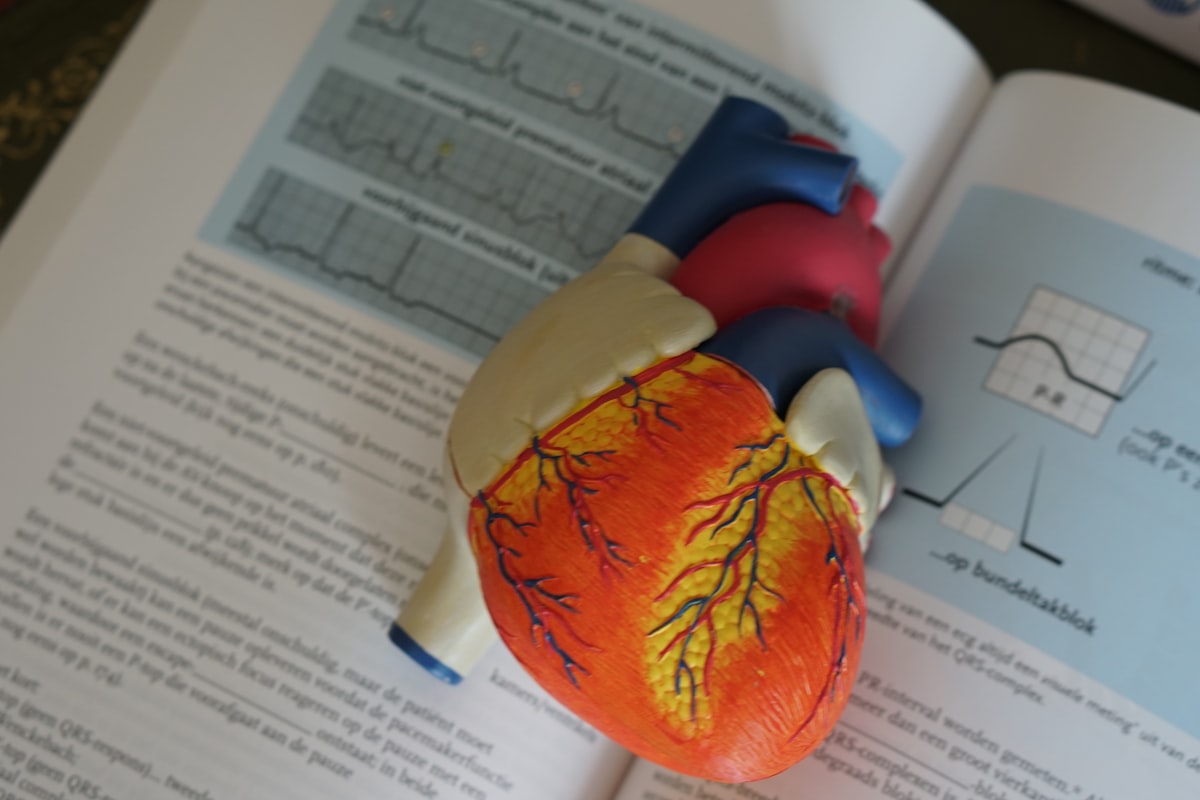
The human heart beats roughly a hundred thousand times a day, pumping blood through a vast network of vessels that would stretch for tens of thousands of miles if laid end to end. Every one of those beats is a small miracle of coordination, and the ability to understand and monitor the heart is built on mathematics. The electrocardiogram, the familiar trace of peaks and valleys that records the electrical activity of the heart, is a graph, a visual representation of voltage changing over time that the trained eye can read like a story.
The mathematics of the heart goes far beyond simple measurement. The flow of blood through arteries and veins is governed by the equations of fluid dynamics, the same branch of mathematics that describes the flow of air over a wing or water through a pipe. The branching pattern of blood vessels follows principles of optimization that minimize the work the heart must do, principles that mathematicians have studied in their own right. Even the irregular rhythms of a heart in trouble can be modelled mathematically, helping doctors to understand and treat dangerous conditions.
For a student, the mathematics of the heart is a window onto the hidden order of the body. It transforms the familiar beat of life into a rich problem of rates, rhythms, and patterns, exactly the kind of problem that mathematical thinking is uniquely equipped to address. UKMT challenges, with their emphasis on pattern recognition and careful reasoning, help students develop the skills that make such thinking possible.
The Lens of Discovery: Microscopy and Measurement
Since the invention of the microscope, scientists have been able to peer into a world invisible to the naked eye, a world of cells, bacteria, and the tiny structures that make life possible. But seeing is only the beginning. To understand what is seen, one must measure, and measurement is the foundation of all science. The mathematics of measurement, from the geometry of lenses to the statistics of counting cells, is what turns a picture into a discovery.

Modern microscopy generates enormous quantities of data, images that must be processed, analysed, and interpreted. Counting cells, tracking their movement, and measuring their shapes are tasks that require sophisticated algorithms and statistical methods. The mathematics of image processing, which began as a theoretical curiosity, now allows researchers to see the living world in unprecedented detail and to draw conclusions from data that would be impossible to process by hand.
This is a wonderful example of how mathematics evolves to meet the needs of science. The algebra and statistics a student learns in school are the foundations of the tools that power modern research. UKMT, by introducing students to the power of measurement and data, helps them see the path from classroom mathematics to the frontiers of scientific discovery.
Doses and Dilutions: The Arithmetic of Pharmacy
Every time a patient receives a medicine, mathematics is at work. The dose must be calculated precisely, based on the weight of the patient, the concentration of the drug, and the desired effect. Too little and the medicine will not work; too much and it may cause harm. This delicate balance is an exercise in ratio and proportion, the same arithmetic that students learn in their earliest mathematics lessons.

The mathematics of drugs does not end with the dose. Once a medicine enters the body, it is absorbed, distributed, metabolized, and eventually eliminated, and the rate at which each of these processes occurs can be described mathematically. The concentration of a drug in the bloodstream often follows a characteristic curve, rising after administration and then falling as the body clears it. Understanding these curves allows doctors to time doses so that the drug stays at an effective level without becoming dangerous.
This is the mathematics of rates and change, applied to the most practical of purposes. A student who learns about decaying quantities and rates of change is learning the very mathematics that keeps patients safe. It is a powerful reminder that the topics studied in school are not abstract but connected to lives and wellbeing, a connection that UKMT helps students to appreciate.
The Mathematics of Epidemiology: Modelling the Spread of Disease
When an infectious disease begins to spread through a population, understanding how fast it will move, how many people it will affect, and what measures might slow it down becomes a matter of urgent importance. The science that answers these questions is epidemiology, and it is built on a foundation of mathematical models. These models describe how people move from being susceptible to infected to recovered, and they use equations to predict the course of an outbreak.
At the heart of epidemiology is a single crucial number, the reproduction number, which estimates how many people, on average, will be infected by each person who has the disease. If this number is greater than one, the outbreak grows; if it is less than one, it shrinks. The power of this simple idea is enormous: it tells public health officials exactly what they need to achieve to bring an epidemic under control. The mathematics of exponential growth, the same mathematics that describes compound interest and population growth, is quite literally a matter of life and death.
Epidemiology is a striking example of how mathematical models can guide action in the real world. The models are not perfect, and they must be continually refined as new data arrives, but they provide a framework for thinking clearly under pressure. The ability to reason with models, to understand their assumptions, and to interpret their predictions is one of the most valuable skills a student can develop, and it is a skill that UKMT helps to nurture.
The Brain and the Numbers That Shape It
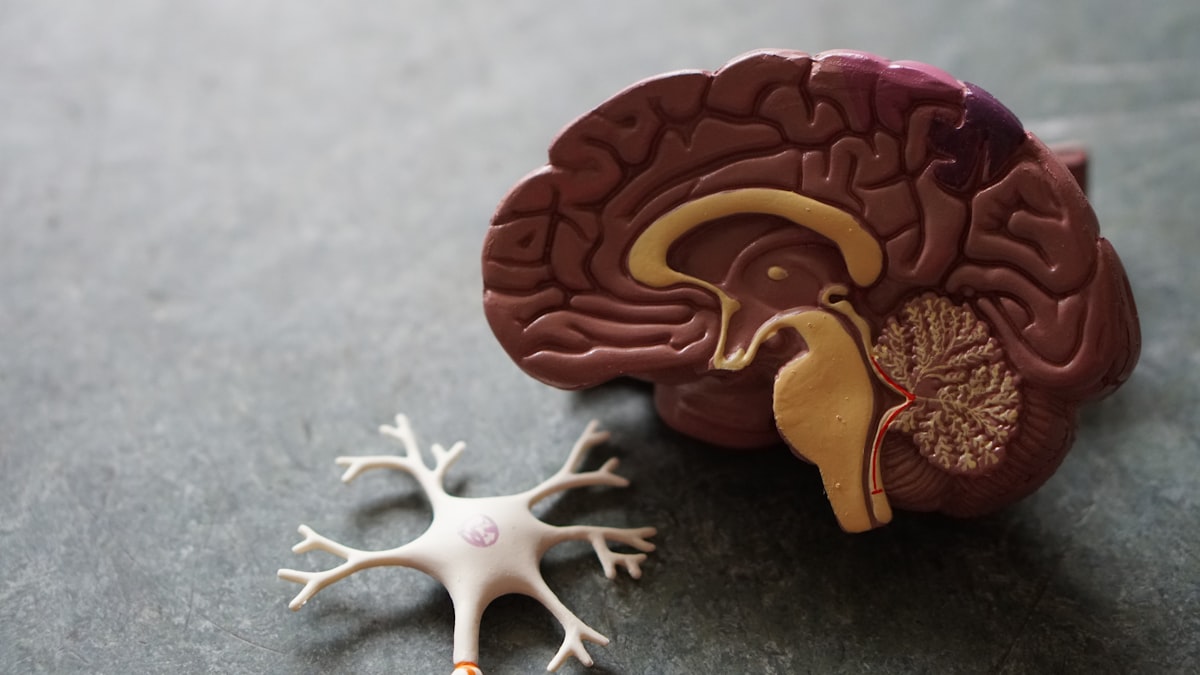
The human brain is the most complex object known to science, a network of roughly eighty-six billion neurons connected by trillions of synapses. Understanding this vast network is one of the great challenges of modern science, and it is a challenge that is deeply mathematical. The brain is, in many ways, an information-processing system, and the mathematics of networks, signals, and computation is essential to understanding how it works.

Neuroscientists use mathematics to model the electrical signals that travel along neurons, to map the connections between different regions of the brain, and to analyse the patterns of activity seen in brain scans. The mathematics of networks, which studies how nodes and connections behave, is central to this effort. It reveals how information flows through the brain, how different regions communicate, and what happens when the network is disrupted by disease.
The study of the brain offers a beautiful example of how mathematics connects to the deepest questions of science. What is thought? How does memory work? How do we learn? Answering these questions will require generations of scientists and mathematicians working together, and the students of today are the ones who will one day make these discoveries. UKMT, by encouraging curiosity and rigorous thinking, helps prepare young people to join this grand adventure.
Cells and Growth: The Exponential Mathematics of Life
A single cell, given the right conditions, can divide to become two. Those two can become four, then eight, then sixteen, and so on, doubling with each generation. This process of exponential growth, the same kind of growth that describes the spread of disease and the accumulation of interest, is one of the fundamental patterns of biology. It is how a single fertilized egg becomes a human being, and it is how a population of bacteria can colonize a new environment with astonishing speed.
Understanding exponential growth is essential not only for biology but for understanding the world in general. It is the reason small changes can have enormous consequences, and why early action is so much more powerful than delayed action. The mathematics of growth and decay appears everywhere in nature, from the rise and fall of populations to the spread of ideas and innovations. It is a concept that every student can grasp, and it opens the door to a deeper understanding of how the world changes.
The study of cell growth also touches on one of the most urgent challenges in medicine: cancer. Cancer is, at its core, a disease of uncontrolled cell division, and the mathematics of how cells grow and spread is essential to understanding and treating it. Mathematical models of tumour growth help doctors to plan treatments, and the development of new therapies relies on the careful analysis of data. Mathematics, here as everywhere in medicine, is a partner in the fight to save lives.
The Hospital as a Mathematical System
A hospital is one of the most complex organizations in the world, a place where thousands of staff, patients, equipment, and supplies must be coordinated around the clock. Running a hospital efficiently is a formidable mathematical challenge. How many beds are needed? How should operating theatres be scheduled? How can emergency rooms allocate resources to minimize waiting times? These are problems of optimization, logistics, and probability, and solving them well can mean the difference between life and death.

The mathematics of queuing theory, which studies how to manage waiting lines and service times, is used to design emergency departments that can handle surges of patients without unacceptable delays. The mathematics of scheduling, which involves assigning resources to tasks in the most efficient way, is used to plan surgery lists and staff rotas. Even the layout of a hospital, the placement of departments and the flow of patients and supplies, is informed by mathematical modelling.
These are not the glamorous applications of mathematics that make the headlines, but they are among the most important. They show that mathematics is not only about grand theories but also about the quiet, practical work of making complex systems function for the people who depend on them. It is a powerful reminder that the skills of careful analysis and optimization that students develop through mathematics are of real and lasting value to society.
Probability and Evidence: The Logic of Clinical Trials
How do we know that a medicine works? The answer lies in the careful design and analysis of clinical trials, a process that is built on the mathematics of probability and statistics. A new treatment is tested by comparing it against an existing one or a placebo in a large group of patients, and the results are analysed to determine whether any difference between the groups is likely to be real or merely the result of chance. This is probabilistic reasoning at its most consequential.
The logic of clinical trials is a model of clear thinking. It requires careful attention to the design of the experiment, the selection of the sample, and the interpretation of the results. It demands an understanding of statistical significance, the idea that a result must be strong enough that it is unlikely to have occurred by luck alone. And it requires honesty about uncertainty, the recognition that no conclusion is ever absolutely certain but only supported by evidence to a high degree of probability. These are exactly the habits of mind that mathematics teaches, and they are central to the way medicine advances.
For a student, understanding the logic of trials is a lesson in how to evaluate evidence in any field. It teaches that correlation is not the same as causation, that a small sample can mislead, and that a single study is rarely enough to settle a question. These are lessons of immense value in a world awash with claims and data, and they are lessons that UKMT, through its emphasis on careful reasoning and evidence, helps students to absorb.
How UKMT Nurtures the Mathematical Mind Behind Medicine
The United Kingdom Mathematics Trust has long understood that the best way to prepare young people for a mathematical future is to let them experience the joy and challenge of real problem-solving. Through its competitions, mentoring, and enrichment programmes, UKMT introduces students to mathematics as it is truly practised, not as a matter of memorization but as a creative exploration of the patterns that govern the world. The same habits of mind that allow a student to solve a tough problem are the habits that would allow them to model a disease, to calculate a dose, or to design a clinical trial.
Medicine and biology are among the most exciting and rewarding fields in which mathematics is applied, and they are fields that will need talented, mathematically trained minds for generations to come. The students who discover a love of mathematics today may be the ones who cure diseases, design the hospitals of the future, or unlock the remaining secrets of the human brain tomorrow. By nurturing curiosity, precision, and a love of discovery, UKMT helps to prepare these students for the extraordinary contributions they will one day make.
The body is a universe of numbers, and the science that heals it is written in the language of mathematics. From the helical code of DNA to the pulse of the heart, from the growth of cells to the spread of disease, mathematics is there, quietly saving lives. To see this is to see mathematics in a new and beautiful light, not as a distant abstraction but as a close and caring partner in the work of human health. The numbers are already there, waiting inside every cell and every heartbeat. All that is needed is the curiosity to look, and the mathematical mind to understand what they reveal.