
Mathematics in the Modern World: Why Mathematical Thinking Matters More Than Ever

We live in an age of unprecedented complexity. From the algorithms that shape our digital experiences to the models that predict climate change, from the financial systems that drive global economies to the artificial intelligence that is transforming every industry, mathematics is the invisible architecture of the modern world. The United Kingdom Mathematics Trust (UKMT) recognizes that mathematical thinking is not merely an academic pursuit but a vital life skill for the twenty-first century. This article explores why mathematical literacy has never been more important and how UKMT's programmes prepare young people for the challenges and opportunities of our rapidly evolving world.

Digital world powered by mathematics

The digital world: built on mathematical foundations that shape every aspect of modern life

推荐

The Algorithmic Age: Mathematics at the Heart of Technology

Every time we search the internet, stream a video, use social media, or navigate with GPS, we are interacting with complex mathematical algorithms. These algorithms determine what information we see, what products are recommended to us, and even what routes we take through our cities. The technology that defines the twenty-first century is, at its core, applied mathematics.

Machine learning and artificial intelligence represent perhaps the most visible manifestation of mathematics in modern technology. These systems learn patterns from vast datasets, make predictions, and automate decisions that once required human judgment. The mathematics behind these technologies — linear algebra, calculus, probability theory, optimization — is exactly the kind of mathematical thinking that UKMT competitions develop.
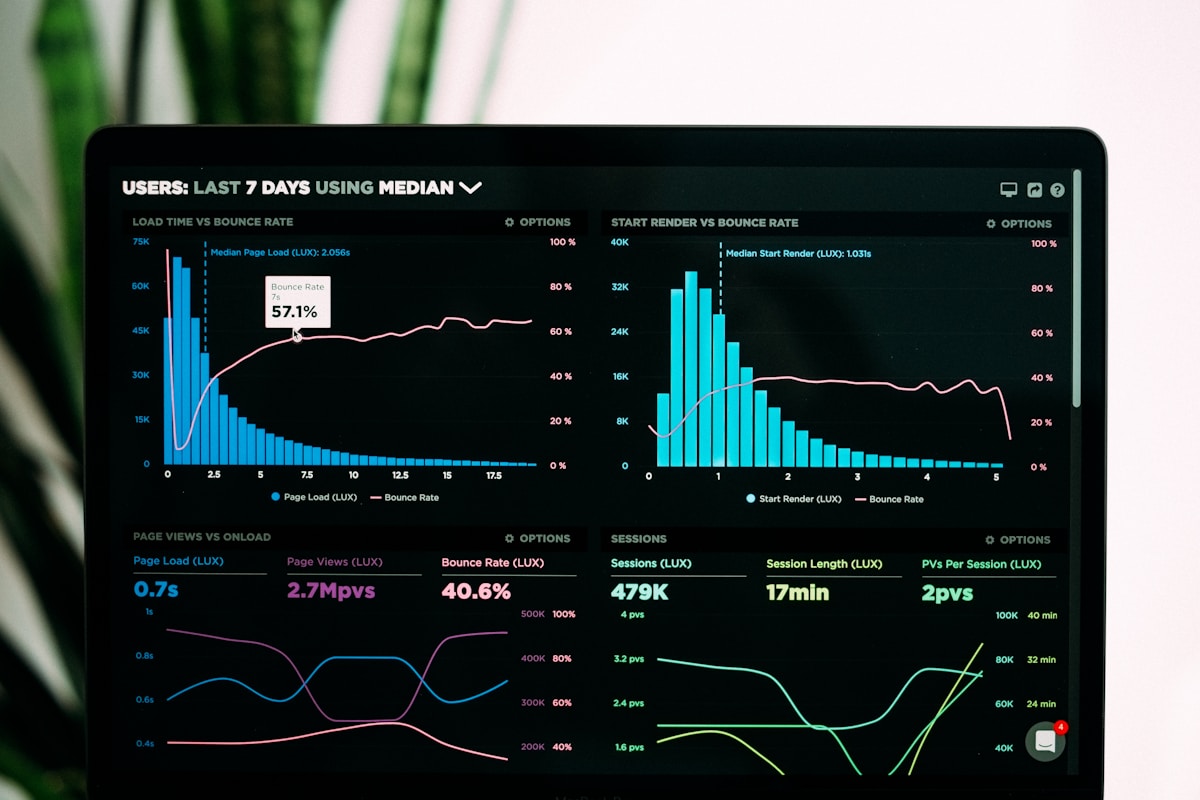
Future technology driven by mathematical innovation

The future is mathematical: artificial intelligence and machine learning transforming every industry

Students who develop strong mathematical thinking through UKMT challenges are uniquely prepared to understand and shape this technological landscape. They learn not just how to apply mathematical techniques but how to think mathematically — to recognize patterns, to reason logically, to construct and evaluate arguments. These skills are essential for anyone who wants to be more than a passive consumer of technology, who wants to understand how these systems work and to contribute to their development.

Data Literacy: Navigating an Information-Rich World

We are drowning in data. Every day, humanity generates approximately 2.5 quintillion bytes of data — from social media posts to sensor readings, from financial transactions to medical records. In this information-rich environment, the ability to understand, interpret, and critically evaluate data is essential for informed citizenship.

Data literacy — the ability to read, understand, create, and communicate data as information — is increasingly recognized as a fundamental skill for the twenty-first century. Citizens who cannot interpret graphs, understand statistics, or recognize misleading data visualizations are vulnerable to manipulation and misinformation. They may make poor decisions about their health, finances, and civic participation based on incomplete or distorted information.

Data visualization and analysis

Data literacy: the ability to understand and critically evaluate information in a data-rich world

UKMT competitions develop the mathematical foundation for data literacy. The logical reasoning skills that students develop through problem-solving translate directly to the ability to analyze data critically. The pattern recognition abilities that help students solve mathematical problems also help them identify trends and anomalies in datasets. The rigorous thinking that olympiad problems demand prepares students to question assumptions and evaluate evidence — skills that are essential for navigating our information-saturated world.

The Global Economy: Mathematics and Financial Understanding

The modern global economy is built on mathematical foundations. Financial markets operate according to complex mathematical models. Businesses use quantitative analysis to make strategic decisions. Governments rely on economic modeling to design policy. Individuals need mathematical understanding to manage their finances, evaluate investment opportunities, and plan for retirement.

Financial literacy — the ability to understand and effectively use financial skills — is increasingly recognized as essential for personal and societal wellbeing. Yet many people struggle with basic financial concepts, making poor decisions about debt, savings, and investment. The mathematical thinking that UKMT develops provides the foundation for financial understanding, enabling young people to navigate the complex financial landscape they will encounter throughout their lives.

Business analytics and financial modeling

The mathematical economy: quantitative thinking driving business and financial decisions

Beyond personal finance, mathematical thinking is essential for understanding the broader economic forces that shape our world. Students who develop strong quantitative reasoning skills are better equipped to understand economic news, evaluate policy proposals, and participate meaningfully in democratic discourse about economic issues. In an age of increasing economic complexity and uncertainty, these skills are more valuable than ever.

Scientific Progress: Mathematics as the Language of Discovery

Mathematics is the language of science. From the equations that describe the motion of planets to the models that predict climate change, from the algorithms that decode the human genome to the simulations that design new materials, mathematics is essential to scientific discovery and technological innovation.

The great scientific challenges of our time — climate change, disease, energy, artificial intelligence — are fundamentally mathematical challenges. Solving them requires not just domain knowledge but the ability to think mathematically: to construct models, to analyze complex systems, to reason about uncertainty, and to communicate findings clearly. UKMT's emphasis on mathematical thinking prepares students to contribute to these vital scientific endeavors.

Scientific discovery through mathematical modeling

Scientific discovery: mathematics as the language of understanding our world

The students who participate in UKMT competitions today may be the scientists, engineers, and researchers who solve tomorrow's greatest challenges. The mathematical thinking skills they develop — logical reasoning, pattern recognition, creative problem-solving, rigorous analysis — are precisely the skills needed to advance scientific knowledge and develop technological solutions to global problems.

Critical Thinking: Mathematics as a Defense Against Misinformation

In an age of "fake news" and misinformation, critical thinking has never been more important. Mathematical thinking provides a powerful defense against manipulation and deception. The logical reasoning skills that mathematics develops enable people to evaluate arguments, identify fallacies, and distinguish valid conclusions from invalid ones.

Many forms of misinformation rely on mathematical illiteracy. Misleading graphs distort data to support false narratives. Misuse of statistics creates false impressions of causation or significance. Logical fallacies — confusing correlation with causation, drawing conclusions from insufficient evidence, applying statistics inappropriately — are common in public discourse. Citizens with strong mathematical thinking skills are better equipped to recognize and resist these manipulations.

Global information network requiring critical thinking

Critical thinking in the information age: mathematical reasoning as a defense against misinformation

UKMT competitions develop the rigorous thinking that underpins critical reasoning. The requirement to justify solutions in olympiad problems teaches students to construct valid arguments and to evaluate the validity of others' reasoning. The experience of working through complex problems develops the patience and persistence needed to analyze information carefully rather than accepting it at face value. These skills are essential for informed citizenship in a democratic society.

推荐

Creativity and Innovation: Mathematics as a Creative Discipline

Mathematics is often perceived as a rigid, rule-bound discipline, but it is fundamentally creative. Mathematical research involves discovering new patterns, inventing new concepts, and finding elegant solutions to complex problems. The creativity required in mathematics is not artistic creativity but intellectual creativity — the ability to see connections, to generate novel approaches, and to think beyond established frameworks.

This intellectual creativity is increasingly valuable in the modern economy. As automation handles routine tasks, human workers are increasingly valued for their ability to think creatively, to solve novel problems, and to generate innovative solutions. The creative problem-solving skills that UKMT develops — the ability to approach unfamiliar problems with confidence, to experiment with different strategies, and to persist through difficulty until finding an elegant solution — are precisely the skills that drive innovation.

Innovation and creative problem-solving

Mathematical creativity: the intellectual creativity that drives innovation and discovery

Many of the most successful entrepreneurs and innovators have strong mathematical backgrounds. They apply mathematical thinking to business problems, seeing patterns that others miss, modeling complex systems, and making decisions based on rigorous analysis rather than intuition alone. UKMT's emphasis on creative problem-solving prepares students for these innovative roles, whether in technology startups, established corporations, or social enterprises.

Communication: Mathematics as a Universal Language

Mathematics is a universal language that transcends cultural and linguistic boundaries. Mathematical notation, logical reasoning, and quantitative analysis are understood and valued across all cultures and disciplines. This universality makes mathematical thinking an essential skill for global citizenship and international collaboration.

In an increasingly interconnected world, the ability to communicate complex ideas clearly is more valuable than ever. Mathematical training develops this communication skill in unique ways. The requirement to construct rigorous proofs teaches students to organize their thoughts logically and to express ideas precisely. The experience of explaining solutions to others develops the ability to adapt communication to different audiences. These skills transfer directly to professional communication, academic writing, and public discourse.

Professional success through mathematical communication

Mathematical communication: a universal language for global collaboration and professional success

UKMT's international connections — through the IMO, the Kangaroo network, and partnerships with mathematical organizations worldwide — expose students to this global mathematical community. They learn that mathematics is not just a school subject but a shared human endeavor that connects people across all boundaries. This global perspective is essential for success in an increasingly interconnected world.

Lifelong Learning: Mathematics as a Foundation for Adaptability

The modern world changes rapidly. Technologies emerge and become obsolete within years. Industries transform. Skills that were essential a decade ago may be irrelevant today. In this environment of constant change, the ability to learn new skills and adapt to new circumstances is more valuable than any specific technical knowledge.

Mathematical thinking provides a foundation for lifelong learning. The logical reasoning, pattern recognition, and problem-solving skills that mathematics develops are transferable across domains. A person who has learned to think mathematically can apply these skills to learning new technologies, understanding new fields, and solving novel problems. This adaptability is essential for career success in a rapidly changing economy.

Adaptability in a changing technological landscape

Lifelong learning: mathematical thinking as the foundation for adaptability in a changing world

UKMT's emphasis on problem-solving rather than rote learning develops exactly this adaptability. Students who learn to approach unfamiliar problems with confidence, to experiment with different strategies, and to persist through difficulty are better equipped to handle the uncertainties of the future. They see change not as a threat but as an opportunity to learn and grow.

Ethical Reasoning: Mathematics and Moral Responsibility

As mathematics becomes more powerful and pervasive, questions of ethics and responsibility become increasingly important. Algorithms can perpetuate bias. Data can be misused. Models can be manipulated. The people who design and deploy mathematical systems have a moral responsibility to consider their impact on individuals and society.

Mathematical training develops the rigorous thinking that underpins ethical reasoning. The habit of questioning assumptions, evaluating evidence, and considering alternative perspectives applies not just to mathematical problems but to ethical dilemmas. The experience of constructing rigorous arguments helps students think carefully about the implications of their choices and the responsibilities that come with expertise.

Ethical considerations in mathematical applications

Ethical responsibility: using mathematical power wisely and for the benefit of all

UKMT's emphasis on rigorous thinking and clear communication prepares students to engage thoughtfully with these ethical questions. The organization's commitment to diversity and inclusion models the kind of ethical thinking that should guide the application of mathematical knowledge. Students who participate in UKMT programmes learn not just mathematical skills but the values and perspectives needed to use those skills responsibly.

The UKMT Advantage: Preparing for an Uncertain Future

The future is uncertain. We cannot predict what specific skills will be needed in twenty years, what technologies will emerge, or what challenges will arise. But we can prepare young people with the thinking skills, mindsets, and values that will serve them well regardless of how the world changes.

UKMT's programmes develop precisely these enduring capabilities. The logical reasoning, creative problem-solving, and rigorous thinking that mathematical challenge cultivates are valuable in any context. The growth mindset, resilience, and love of learning that UKMT fosters enable students to adapt and thrive as the world changes. The community and values that UKMT builds prepare students to use their abilities responsibly and for the benefit of others.

Success in an uncertain future

The UKMT advantage: preparing young people with skills and mindsets for an uncertain future

In a world of increasing complexity and uncertainty, mathematical thinking is not a luxury but a necessity. It is the foundation for data literacy, financial understanding, scientific progress, critical thinking, creativity, communication, adaptability, and ethical reasoning. UKMT's mission — to nurture mathematical talent in young people from all backgrounds — is more important than ever. The young people who develop strong mathematical thinking today will be the leaders, innovators, and citizens who shape tomorrow's world.


推荐

The Psychology of Mathematical Problem-Solving: How UKMT Competitions Develop the Mind

When a student sits down to tackle a UKMT competition paper, something remarkable happens in their brain. Neural pathways activate, patterns are recognized, hypotheses are formed and tested, and the mind engages in one of the most complex and rewarding cognitive activities known to humanity. The psychology of mathematical problem-solving is a fascinating field that reveals how mathematical challenge shapes not just what students know, but how they think. UKMT competitions, with their carefully designed problems and progressive structure, provide an ideal environment for developing powerful cognitive abilities.

Brain and thought processes

The thinking brain: where mathematical problem-solving creates new neural connections

推荐

The Cognitive Architecture of Problem-Solving

Mathematical problem-solving engages multiple cognitive systems simultaneously. Working memory holds the problem statement and intermediate results in active awareness. Pattern recognition systems search for familiar structures and relationships. Executive function directs attention, plans strategies, and monitors progress. Creative thinking generates novel approaches when standard methods fail.

Research in cognitive psychology has shown that expert problem-solvers do not simply have more knowledge than novices — they organize their knowledge differently. Where beginners see isolated facts and procedures, experts see interconnected networks of concepts, relationships, and strategies. This organized knowledge structure allows experts to recognize problem types quickly, retrieve relevant strategies efficiently, and monitor their progress effectively.

Focused mind engaged in deep thinking

Deep focus: the state of mind that mathematical challenge cultivates

UKMT competitions are designed to develop this expert-like knowledge organization. The problems span multiple mathematical domains — number theory, geometry, algebra, combinatorics, logic — requiring students to make connections across areas. The progressive difficulty structure ensures that students build on existing knowledge while continually extending their capabilities. Over time, regular participation in UKMT challenges helps students develop the interconnected, flexible knowledge structures that characterize mathematical expertise.

The Role of Challenge: Optimal Cognitive Engagement

Psychological research has identified a concept known as the zone of proximal development — the sweet spot where tasks are challenging enough to promote growth but not so difficult as to cause frustration and disengagement. UKMT competitions are carefully calibrated to operate within this zone for students at each level.

The multiple-choice challenges (JMC, IMC, SMC) are structured so that the early questions are accessible to most participants, building confidence and engagement, while later questions stretch even the strongest students. This design ensures that every student experiences success while also encountering genuine challenge. The olympiad rounds provide even deeper challenge for those who seek it, offering problems that require sustained creative thinking and rigorous proof construction.

Problem-solving in action

The optimal challenge: problems that stretch abilities without overwhelming

This optimal challenge has profound psychological benefits. Students learn that struggle is not a sign of failure but a necessary part of learning. They develop cognitive resilience — the ability to persist through difficulty, to tolerate uncertainty, and to maintain effort when solutions are not immediately apparent. These psychological qualities transfer to all areas of life, from academic study to professional work to personal challenges.

Metacognition: Thinking About Thinking

One of the most powerful cognitive skills developed through mathematical problem-solving is metacognition — the ability to think about one's own thinking. Expert problem-solvers constantly monitor their progress, asking themselves questions: Am I on the right track? Is this approach working? What have I tried that didn't work? What else could I try?

UKMT competitions naturally develop metacognitive skills. The time-limited format requires students to make strategic decisions about which problems to attempt and how long to spend on each. The need to show working in olympiad problems forces students to externalize their thinking, making their thought processes visible and subject to review. The experience of getting stuck and then finding a way through teaches students to recognize and manage their own cognitive states.

Research has shown that metacognitive skills are among the strongest predictors of academic success, even more so than raw intelligence. Students who can monitor and regulate their own learning are better able to identify gaps in their understanding, seek appropriate help, and persist through challenges. UKMT's emphasis on problem-solving rather than rote learning naturally cultivates these crucial self-regulatory skills.

Creativity and Mathematical Insight

Mathematical creativity is a distinctive form of creative thinking that involves seeing patterns, making unexpected connections, and finding elegant solutions to complex problems. The "aha!" moment of mathematical insight — when a problem suddenly becomes clear — is one of the most rewarding cognitive experiences available to the human mind.

Neuroscience research has shown that mathematical insight involves a characteristic pattern of brain activity. The initial phase of problem-solving engages analytical, left-hemisphere processing as the problem-solver applies standard methods and procedures. When these approaches fail, the brain shifts to a more diffuse, right-hemisphere mode, allowing remote associations and novel connections to emerge. The moment of insight is accompanied by a burst of gamma-wave activity, reflecting the sudden integration of previously disconnected information.

Creative thinking and insight

The creative mind: where mathematical insight emerges from the interplay of analysis and imagination

UKMT competitions are designed to elicit this creative process. The problems cannot be solved by routine application of formulas — they require genuine mathematical thinking. Students must experiment with different approaches, recognize when standard methods are insufficient, and generate novel strategies. This creative challenge develops the flexible, generative thinking that characterizes mathematical creativity.

The satisfaction of mathematical insight is a powerful motivator. Students who experience the joy of solving a challenging problem develop intrinsic motivation for mathematical engagement. They seek out new challenges not for external rewards but for the cognitive pleasure of problem-solving itself. This intrinsic motivation is essential for sustained mathematical development and lifelong learning.

Growth Mindset: The Belief That Ability Develops

Perhaps the most significant psychological benefit of UKMT participation is the development of a growth mindset — the belief that mathematical ability is not fixed but develops through effort and practice. This mindset, identified by psychologist Carol Dweck, has profound implications for how students approach challenges and respond to setbacks.

Students with a fixed mindset believe that mathematical talent is innate — you either have it or you don't. When they encounter difficulty, they interpret it as evidence of their lack of ability, leading to discouragement and avoidance. Students with a growth mindset believe that ability develops through effort. When they encounter difficulty, they interpret it as an opportunity to learn and grow, leading to persistence and engagement.

Moment of inspiration and growth

Growth mindset: the belief that mathematical ability develops through effort and practice

UKMT competitions naturally foster a growth mindset. The progressive difficulty structure ensures that students experience both success and challenge, demonstrating that improvement is possible through practice. The mentoring scheme provides sustained support over time, allowing students to see their own development across months of engagement. The experience of solving problems that once seemed impossible provides powerful evidence that ability is not fixed but grows with effort.

推荐

Emotional Regulation: Managing Frustration and Anxiety

Mathematical problem-solving is an emotional experience. Students feel excitement when they make progress, frustration when they get stuck, anxiety when time is running out, and satisfaction when they finally solve a problem. Learning to manage these emotions effectively is an essential part of mathematical development.

UKMT competitions provide a safe environment for developing emotional regulation skills. The time-limited format creates mild pressure, teaching students to manage anxiety and maintain focus under stress. The experience of getting stuck and then finding a way through teaches students to tolerate frustration and persist through difficulty. The recognition that not finishing the paper is normal and expected helps students manage perfectionism and unrealistic expectations.

Mindfulness and emotional regulation

Emotional regulation: managing frustration, anxiety, and pressure in mathematical challenge

These emotional regulation skills transfer far beyond mathematics. Students who learn to manage frustration in problem-solving are better equipped to handle challenges in other academic subjects, in professional work, and in personal life. The ability to stay calm under pressure, to persist through difficulty, and to maintain a positive attitude in the face of setbacks are valuable life skills that UKMT participation helps to develop.

Social Cognition: Learning from Others

Mathematical problem-solving is often perceived as a solitary activity, but social interaction plays a crucial role in mathematical development. Discussing problems with peers, explaining solutions to others, and learning from different approaches all enhance mathematical understanding and develop social cognitive skills.

UKMT's team competitions provide rich opportunities for social cognitive development. In the Team Maths Challenge, students must communicate their thinking clearly, listen to others' ideas, and work collaboratively to solve problems. This social interaction develops not only mathematical understanding but also perspective-taking — the ability to understand and appreciate different approaches to the same problem.

Collaborative idea generation

Social cognition: learning from others' approaches and perspectives

The mentoring scheme also provides valuable social cognitive experiences. Working one-to-one with a mentor allows students to see how an experienced mathematician approaches problems, to ask questions and receive feedback, and to develop their mathematical communication skills. This social learning accelerates mathematical development and provides students with role models who demonstrate the value of mathematical thinking.

Transfer: Mathematical Thinking in Everyday Life

One of the most important questions in educational psychology is whether skills learned in one context transfer to other contexts. Does mathematical problem-solving develop general cognitive abilities that apply beyond mathematics? Research suggests that the answer is yes, particularly when the learning emphasizes thinking processes rather than specific content.

UKMT's focus on problem-solving rather than curriculum content maximizes transfer. The logical reasoning, pattern recognition, and strategic thinking skills that students develop through UKMT challenges apply to a wide range of real-world situations. Students who learn to approach mathematical problems systematically are better equipped to tackle complex challenges in science, engineering, business, and everyday life.

Brain applying mathematical thinking to real-world problems

Transfer: mathematical thinking skills that apply far beyond the classroom

The metacognitive skills developed through UKMT participation are particularly transferable. Students who learn to monitor their own thinking, to evaluate their progress, and to adjust their strategies are better able to manage their learning in any subject area. These self-regulatory skills are essential for success in higher education and professional life, where students must direct their own learning and solve novel problems independently.

The Long-Term Impact: Shaping Cognitive Development

The psychological benefits of UKMT participation extend far beyond the competition period. The cognitive skills, mindsets, and emotional regulation abilities that students develop through regular mathematical challenge become enduring features of their cognitive architecture. These developments shape how students approach learning, problem-solving, and challenge throughout their lives.

Research in cognitive development has shown that the adolescent brain is particularly plastic — highly responsive to experience and capable of significant growth. Mathematical challenge during this period can have lasting effects on cognitive abilities, particularly in areas such as logical reasoning, working memory, and executive function. UKMT's programmes, which engage students throughout their secondary school years, capitalize on this developmental plasticity to promote lasting cognitive growth.

Long-term cognitive development

Lasting impact: how mathematical challenge shapes cognitive development across the lifespan

The growth mindset developed through UKMT participation also has long-term benefits. Students who believe that ability develops through effort are more likely to seek out challenges, persist through difficulty, and continue learning throughout their lives. This lifelong learning orientation is essential in a rapidly changing world where the ability to adapt and acquire new skills is increasingly important.

Implications for Parents and Teachers

Understanding the psychology of mathematical problem-solving has practical implications for parents and teachers who want to support young mathematicians. The research suggests several key principles for fostering mathematical development.

First, emphasize process over outcome. Praise students for their effort, strategies, and persistence rather than just their results. This reinforces the growth mindset and encourages students to value the learning process itself. When students struggle with a problem, help them see the struggle as an opportunity for growth rather than evidence of inability.

Supporting mathematical development

Supporting growth: how parents and teachers can nurture mathematical thinking

Second, provide appropriate challenge. Students need problems that stretch their abilities without overwhelming them. UKMT's tiered structure makes it easy to find appropriate challenges for students at each level. Encourage students to work on problems that are just beyond their current ability, and celebrate their progress as they master new challenges.

Third, encourage reflection and discussion. Ask students to explain their thinking, to reflect on what strategies worked and what didn't, and to discuss problems with peers. This metacognitive and social engagement deepens understanding and develops communication skills. The mentoring scheme and team competitions provide structured opportunities for this kind of engagement.

The Joy of Mathematical Thinking

At its heart, the psychology of mathematical problem-solving is about joy. The satisfaction of solving a challenging problem, the excitement of mathematical discovery, the pleasure of elegant reasoning — these are among the most rewarding experiences available to the human mind. UKMT competitions provide countless opportunities for students to experience this joy, creating positive associations with mathematical thinking that last a lifetime.

When students discover that mathematics is not just a school subject but a source of intellectual pleasure and creative satisfaction, their relationship with learning is transformed. They seek out mathematical challenges not because they have to, but because they want to. They approach problems with curiosity and confidence rather than anxiety and avoidance. This transformation is perhaps UKMT's greatest gift to the young people it serves.

The joy of mathematical thinking

The joy of mathematics: where challenge meets satisfaction and learning becomes pleasure

The mind that learns to love mathematical thinking is a mind equipped for a lifetime of learning, problem-solving, and creative achievement. UKMT's competitions and enrichment programmes provide the challenges, support, and community that help young people develop this love of mathematics. In doing so, they shape not just better mathematicians, but more capable, resilient, and creative thinkers — individuals equipped to thrive in an increasingly complex world.

推荐
Online Customer Service
Contact Customer Service