Behind every student who discovers a love of mathematics, there is a teacher who made it possible. The United Kingdom Mathematics Trust (UKMT) understands this deeply. While its competitions are designed for students, its success depends entirely on the dedication of mathematics teachers across the United Kingdom. This guide is written specifically for educators — those who want to bring UKMT's rich world of mathematical enrichment into their classrooms, support their most able students, and discover the full range of resources available to them.

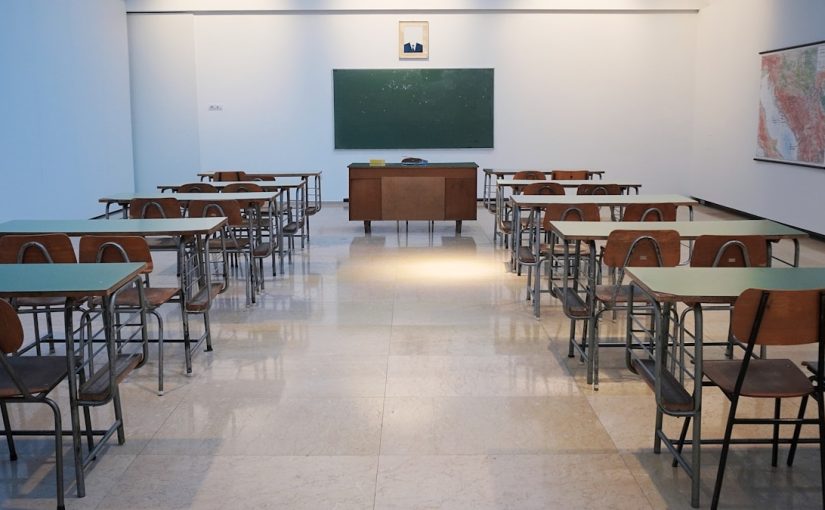
The classroom is where mathematical curiosity begins — and where UKMT's resources come to life

Getting Your School Registered with UKMT
Before your students can participate in any UKMT competition, your school must become a registered UKMT centre. The registration process is straightforward and free. Once registered, you gain access to the full suite of UKMT resources, including competition papers, past papers, video solutions, and the Primary Mathematics Resources programme.
To register, visit the UKMT website and complete the online registration form. You will need to provide basic information about your school, including its name, address, and the name of the teacher who will serve as the UKMT centre coordinator. The coordinator is the person responsible for entering students into competitions, downloading papers, and uploading answer sheets after each event.
Thousands of schools across the UK, Crown Dependencies, and British International Schools are registered UKMT centres
Eligible institutions include all schools in the United Kingdom (England, Wales, Scotland, and Northern Ireland), Crown Dependencies (Jersey, Guernsey, and the Isle of Man), and British International Schools worldwide. If you are unsure whether your school is already registered, you can check by contacting UKMT directly at enquiries@ukmt.org.uk.
Understanding the Competition Entry Process
Once your school is registered, entering students into competitions is simple. UKMT sells entry packs for each competition, with pricing structured to be affordable for schools of all sizes. The Junior Mathematical Challenge costs £16 per pack of 10 posted papers, or £15 per pack of 10 for download-and-print format. Similar pricing applies to the Intermediate and Senior challenges. Follow-on rounds such as the Kangaroo and Olympiad events have different pricing structures, with automatic qualifiers entered free of charge and discretionary entries available for purchase.
From registration to results: the competition entry process is designed to be as smooth as possible for busy teachers
All UKMT competitions are now paper-format only. This means that question papers are either posted to your school or downloaded for printing, and answer sheets are completed by hand and then uploaded to the UKMT portal after the competition. The shift to paper-only format was made to ensure fairness and to replicate the experience of traditional examination conditions.
The Competition Handbook: Your Complete Administrative Guide
Every teacher who coordinates UKMT competitions should download and read the Competition Handbook. This comprehensive document covers every aspect of hosting a UKMT competition, from invigilation procedures to answer sheet handling, from accessibility arrangements to deadlines. It is updated annually and reflects the latest format changes, including the new 000-999 answer questions being trialled in the Senior Mathematical Challenge for 2026.

The Competition Handbook and UKMT publications: essential resources for every mathematics department
The handbook is available for free download from the UKMT website, accessible through each competition's page. It answers the vast majority of questions that teachers have about running competitions, and it is the first port of call when administrative queries arise.
Past Papers: The Most Powerful Teaching Tool Available
UKMT makes past papers freely available for all of its competitions, and these represent the single most valuable resource for teachers looking to develop their students' problem-solving skills. Each past paper contains carefully crafted problems that are designed to stretch mathematical thinking, and they come with complete solutions and mark schemes.

Past papers: freely available, endlessly valuable, and the most effective preparation resource for every UKMT competition
Teachers can use past papers in many ways. Some use them as the basis for after-school maths clubs, working through problems collaboratively with students. Others set them as extension work for high-attaining students during regular lessons. Some departments run internal mock competitions using past papers, helping students become familiar with the format and time pressure of the real events. The key principle is that regular exposure to UKMT-style problems transforms students' mathematical thinking, regardless of whether they ultimately compete.
Video Solutions: Bringing Problems to Life
In addition to written solutions, UKMT provides video solutions for many past paper problems. These videos walk students through the problem-solving process step by step, modelling the kind of mathematical thinking that written solutions alone cannot convey. Teachers can use these videos in class, assign them as homework, or recommend them to students who want additional support.

Video solutions: modelling expert problem-solving thinking that students can learn from at their own pace
The Dr Frost Maths Partnership: Bringing UKMT into Your Classroom
UKMT has partnered with Dr Frost Maths, an online platform for mathematics teaching and learning, to help teachers integrate UKMT past papers and problems into everyday classroom teaching. Through this partnership, Dr Frost Maths provides tools that allow teachers to assign specific UKMT problems to individual students or whole classes, track progress, and provide targeted support.
This partnership is particularly valuable because it bridges the gap between enrichment and curriculum. Rather than treating UKMT competitions as an extra-curricular add-on, teachers can embed UKMT-style problems into their regular teaching, ensuring that all students — not just the most able — benefit from the kind of mathematical thinking that UKMT promotes.

The Dr Frost Maths partnership: bringing UKMT problems into everyday classroom teaching for all students
The Mentoring Scheme: A Resource for Your Most Able Students
If you have students who consistently excel in mathematics and crave further challenge, the UKMT Mentoring Scheme is an extraordinary opportunity. The scheme provides nine programmes of increasing difficulty, each named after a renowned mathematician, from Pythagoras (entry level) to Ramanujan (most advanced). Each programme consists of eight monthly problem sets, and students are paired with an experienced volunteer mentor who provides one-to-one guidance.
As a teacher, you can nominate one student per school for the mentor-led programmes (Hypatia through Ramanujan). Applications for the 2026/27 academic year close on 16th September 2026. The in-school programmes (Pythagoras, Hypatia, and Archimedes) can be accessed directly by registered UKMT centres through the documents section of your competition profile. These are designed for teachers to run within their own schools, with guidance materials provided.
Primary Mathematics Resources: Supporting the Transition from Primary to Secondary
For teachers in secondary schools who work with feeder primary schools, the Primary Mathematics Resources (PMR) programme is invaluable. Launched by a team of primary teachers and UKMT volunteers, the PMR provides materials designed to bridge the gap between primary and secondary mathematics education. The 2026 materials include investigative tasks, competition rounds (Crossnumber, Group, Logic, Make a Number, Relay, and Shuttle), and new mathematical craft and practical activities.
Secondary school teachers can use these resources to run competitions for local primary schools, provide materials for taster days and transition events, or give support and confidence to students early in their first year of secondary school. All PMR materials are aligned with the National Curriculum in England and the Scottish Curriculum for Excellence, and they are available for free download to registered UKMT centres.
Primary Mathematics Resources: helping secondary teachers support the transition from primary to secondary mathematics
UKMT Books: Curated Resources for the Classroom and Beyond
UKMT publishes a range of high-quality mathematics books that are available through their shop and on Amazon. These books contain curated collections of competition problems with detailed solutions, and they are organised by level and topic. Popular titles include First Steps for Problem Solvers, which provides an accessible introduction to competition mathematics, and the various bundle packages that group problems by theme.
The annual UKMT Yearbooks are particularly valuable for teachers. Each yearbook compiles the best problems from that year's competitions, complete with solutions and commentary. They serve as both a record of the Trust's work and a preparation resource for future years. Many teachers build their own library of UKMT publications over time, creating a comprehensive collection that they can draw on year after year.
Supporting Home-Educated Students
UKMT welcomes participation from home-educated students, and teachers at registered centres can play an important role in making this possible. Home-educated students may participate in UKMT competitions through any registered centre, at the school's discretion. If a home-educating family approaches your school, consider whether you can host their child for competitions. While you are not obliged to do so, many schools find this a rewarding way to support their local community.
Strategies for Building a Mathematical Culture in Your School
The most successful UKMT centres are those that have built a mathematical culture throughout their school. This goes beyond simply entering students for competitions — it involves creating an environment where mathematical thinking is valued, celebrated, and visible. Some strategies that effective departments use include running regular maths clubs where students work on UKMT-style problems collaboratively, celebrating success publicly through assemblies and newsletters when students achieve awards, displaying competition posters in corridors and classrooms, and encouraging older students to mentor younger ones in problem-solving techniques.
Team competitions such as the Team Maths Challenge and Senior Team Maths Challenge are particularly effective at building mathematical culture, because they create a sense of collective identity around mathematics. Students who represent their school in team competitions often become ambassadors for the subject, inspiring their peers to get involved.
The UKMT Newsletter and Professional Community
Teachers can stay connected to the UKMT community through the quarterly UKMT Newsletter, which is sent directly to subscribers. The newsletter provides updates on upcoming competitions, new resources, changes to format or policy, and highlights from recent events. Signing up takes just a moment and ensures that you never miss an important deadline or opportunity.
Beyond the newsletter, UKMT maintains an active presence on Instagram, Facebook, YouTube, and TikTok. These channels provide behind-the-scenes content, competition updates, and enrichment materials that teachers can share with their students and colleagues. The YouTube channel, in particular, hosts the video solutions that accompany past papers, as well as highlights from summer schools and other events.
Volunteering: Giving Back to the Mathematical Community
If you have the capacity and the desire, consider volunteering with UKMT. The Trust relies on hundreds of volunteers to deliver its programmes, from summer school session leaders to one-to-one mentors, from competition paper setters to markers. Volunteers come from a range of backgrounds — some are serving teachers, others are university students or recent graduates, and others are professionals who want to give back to mathematics education.
To express interest in volunteering, email volunteering@ukmt.org.uk. Whether you can commit a few hours per term or a full week during the summer schools, your contribution will make a meaningful difference to young people's mathematical development.
You are the heart of UKMT's mission.
Register your school and explore all resources at www.ukmt.org.uk